BMW Collision Repair in San Diego: Dealer or Body Shop?
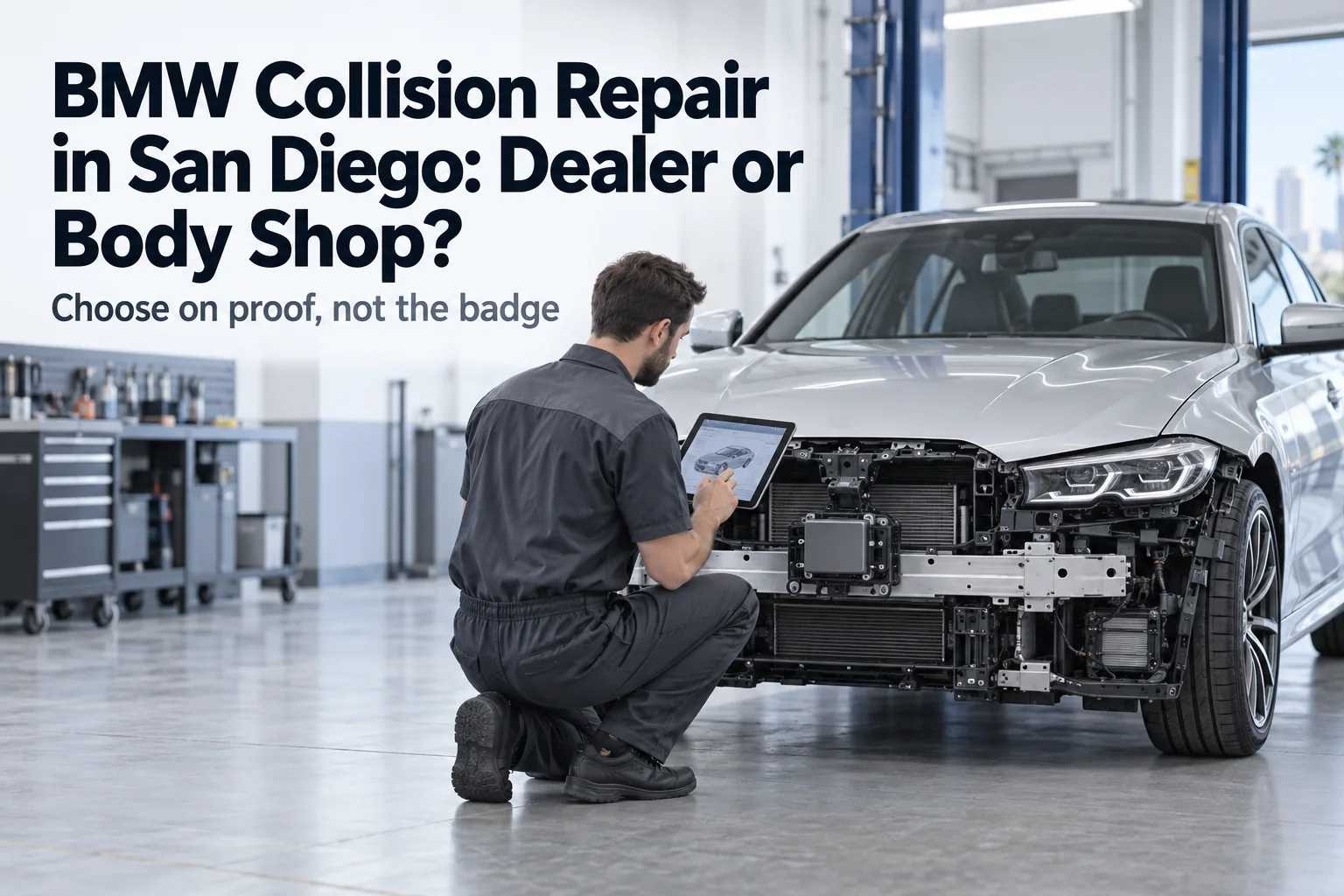
For BMW collision repair in San Diego, the dealer isn't automatically better, and the independent body shop isn't automatically a shortcut. What counts is whether the shop repairs the car to BMW's published procedures, measures the structure, scans before and after, and recalibrates the driver-assistance systems. Dealer or independent, make it show you each one.
Choose on proof of procedure, not on the badge on the building
A modern BMW is built from a mix of materials. High-strength steel is common. Aluminum shows up in many panels and structural parts, and a few models use carbon fiber. Each material has its own rules for cutting, joining, heating and replacing. Get that wrong and the car can look perfect while the crumple zones no longer behave as designed.
That's why the manufacturer publishes repair procedures. A shop that follows them can tell you which parts are replace-only, where welding is not allowed, and which sensors need a reset afterward. A shop that says we just fix them like any other car is telling you something. It isn't good.
Ask these five questions before you hand over the key
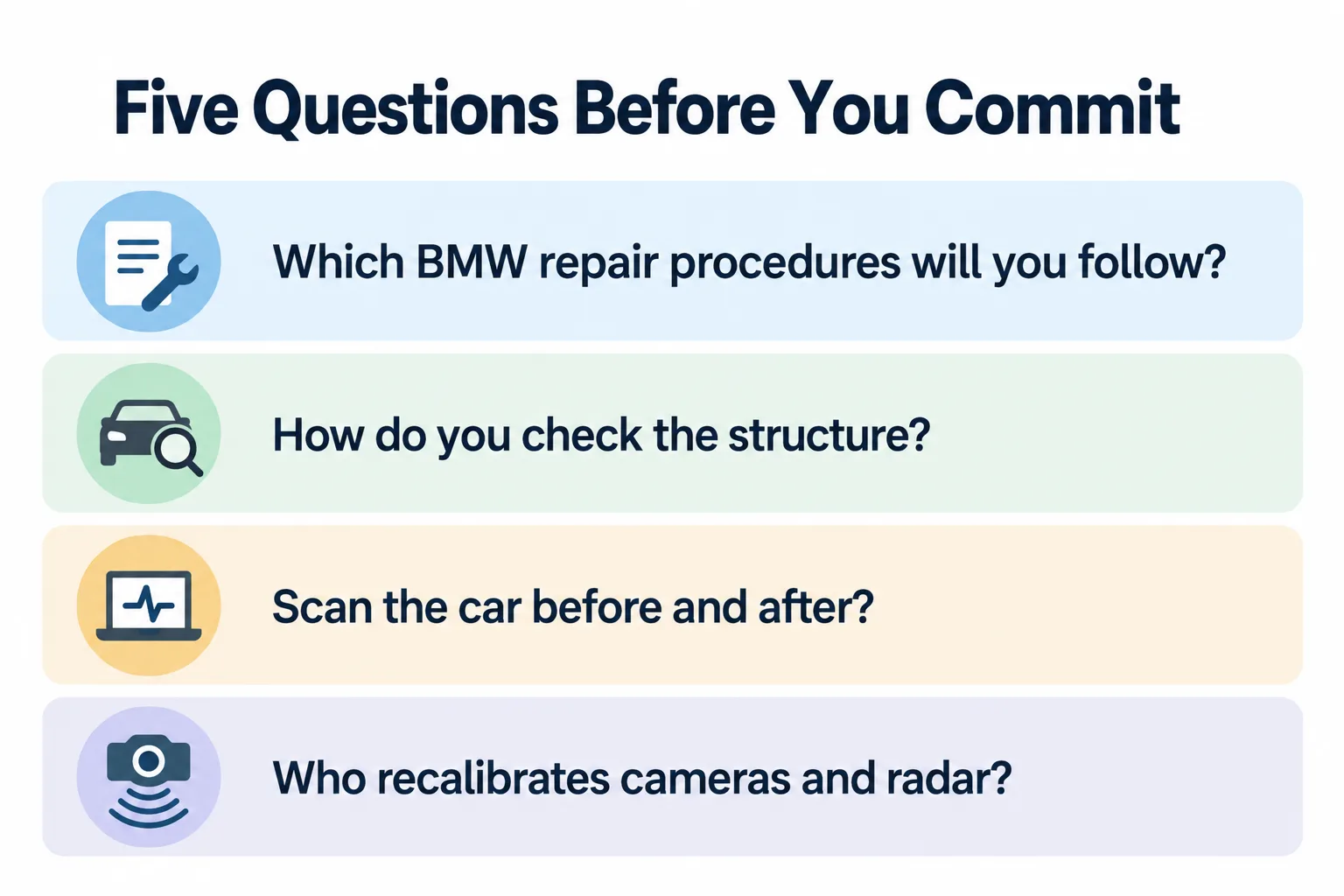
- Which BMW repair procedures will you follow for my model and year? A good answer names the procedure source and says it is printed and kept with the repair file.
- How do you check the structure? If there is any chance of frame or unibody involvement, the answer should be computerized measuring against factory specs, not a visual check.
- Will you scan the car before and after the repair? A pre-repair scan finds fault codes the accident set off. A post-repair scan proves they are cleared.
- Who recalibrates the cameras and radar, and how is it documented? You want a report in your paperwork, not a verbal yeah, it's done.
- Where is the work physically done? Some dealerships do body work in-house and some send it elsewhere. Ask, so you know whose hands are on the car.
If a shop dodges two or more of these, keep looking. It doesn't matter whether the sign out front says BMW.
A dealer makes sense in some cases, and an independent in others
This part may annoy people on both sides.
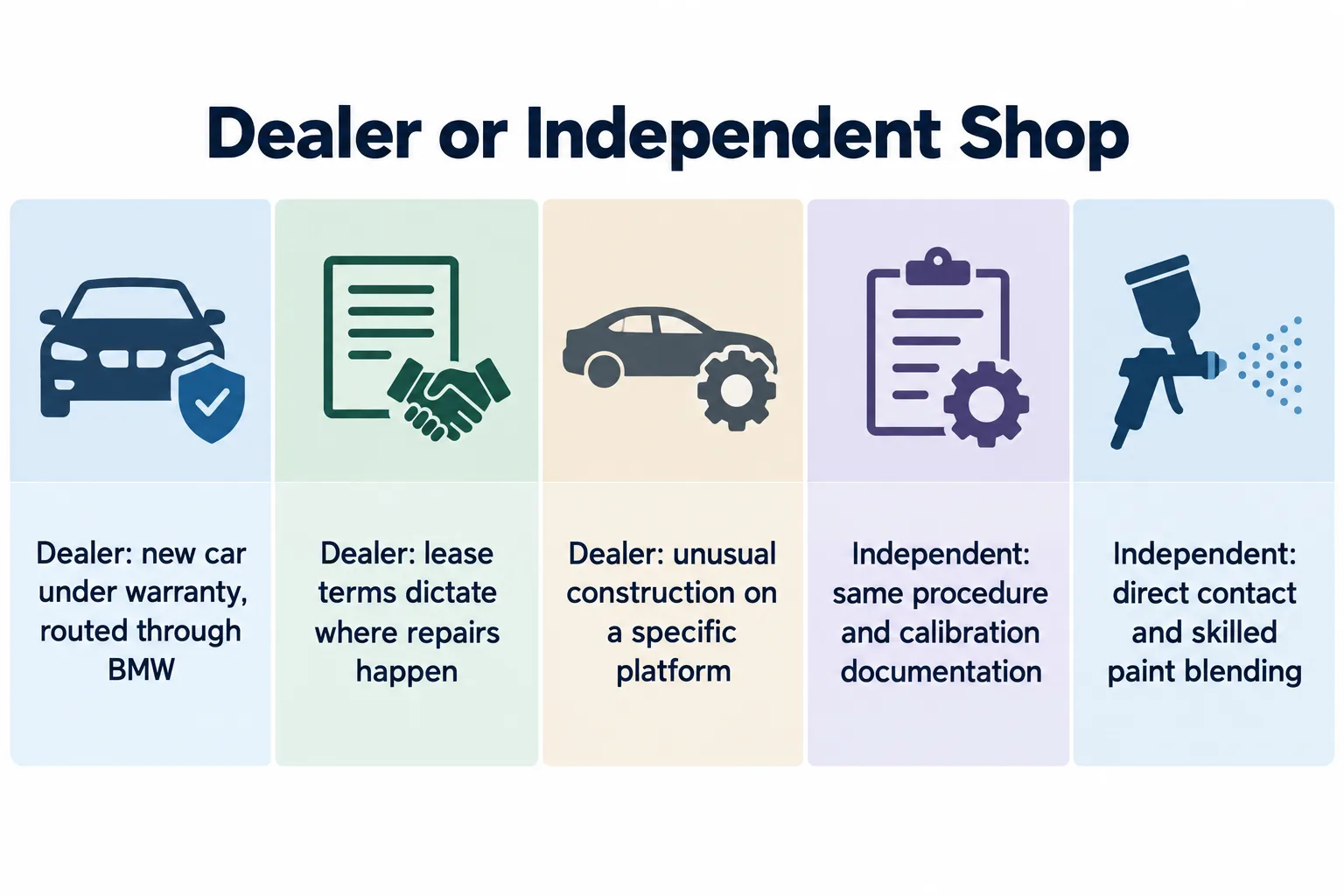
Consider the dealer when the car is very new and still under warranty and you want everything routed through BMW. Also when your lease agreement spells out where repairs must happen (read it; some do), or when the damage involves a model with unusual construction and you want a shop that handles that exact platform.
Consider an independent body shop when it can show the same procedure, measuring and calibration documentation, and when you want more direct contact with the people doing the work. Paint matters here too. Color matching and blending on metallic and mineral finishes is a body-shop craft, and a good refinish is invisible from any angle.
Neither choice protects you on its own. The paperwork does.
Cameras and sensors are where careless repairs show up later
A BMW can have a camera behind the windshield, radar in the bumper or grille, and ultrasonic parking sensors in the bumper covers. A moderate bumper impact can shift a sensor a few degrees. The car still drives normally and the dashboard stays quiet, while lane or braking assistance quietly works from bad data.
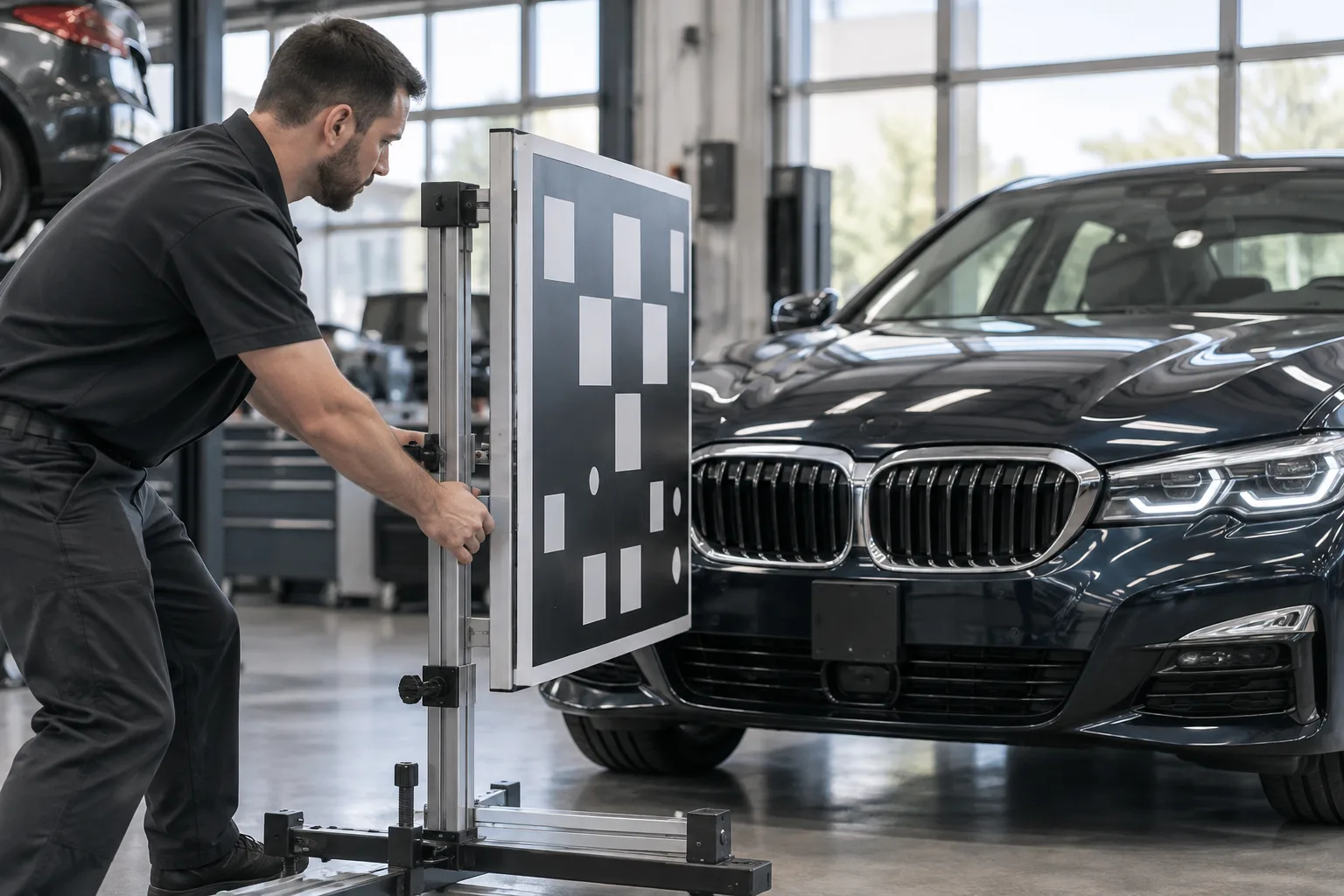
So a repair isn't done when the paint is dry. It's done when the systems are recalibrated and a scan confirms it. We cover when and why in our post on ADAS calibration after windshield or bumper replacement.
One related symptom: if the car drifts or the steering wheel sits off-center after a hit, that points to alignment or suspension damage, even when the body looks fine. Ask for it to be checked as part of the repair.
In California, you choose the shop, even when insurance is paying
An insurer may suggest a shop from its network. That's a suggestion, nothing more. In California, the customer chooses the repair shop, so if you want a BMW-focused repair, say so when you open the claim. Our post on whether your insurance company can make you use their body shop walks through that conversation, and our page on collision repair and insurance claims explains the steps in plain terms. If you are unsure about your own policy, your insurer or an attorney can answer that part.
One practical tip for BMW claims: the first estimate often misses hidden damage, such as brackets, sensors and structural parts behind the bumper cover. When the shop finds more after taking the car apart, it sends the insurer an added-cost request, usually called a supplement. That's normal. Ask the shop to tell you when one is filed and why.
Where San Diego Auto Repair & Collision fits
San Diego Auto Repair & Collision is a collision shop at 3877 42nd St in City Heights, San Diego, serving drivers across North Park, University Heights, Normal Heights, Kensington, Talmadge, Hillcrest, South Park, Golden Hill and the College Area. Our luxury vehicle repair covers BMW, Mercedes-Benz, Lexus, Porsche and Audi, done following manufacturer procedures, including ADAS sensor and camera recalibration. Frame repair uses computerized measuring and unibody straightening to factory specs. Paint work carries a lifetime paint warranty. We work with all insurance companies and send photo updates by text during repairs, and you can see the steps on our repair process page.
Estimates are free. Send photos and details through our contact page or call (619) 282-2400, and put any of the five questions above to us. You should get straight answers.
Quick answers before you call a shop
Do I have to take my BMW to the dealer after an accident?
No. In California you choose the repair shop, including when an insurance claim is paying. Pick the one that can show you BMW repair procedures, structural measuring, pre- and post-repair scans, and calibration reports. If you lease the car, check the lease terms for repair requirements first.
Will an independent body shop affect my BMW's value or warranty?
Repair quality is what affects value. A repair that follows the manufacturer's procedures and is fully documented protects resale better than one nobody can explain. For warranty questions on a specific component, ask your dealer or read your warranty paperwork before you decide.
Does my BMW need calibration after a bumper repair?
Often, yes. If the car has radar, cameras or parking sensors in or behind the bumper, they usually need to be checked and recalibrated after bumper work. Ask the shop whether your model has these systems, and request the calibration report.
How long will a BMW repair take?
No honest shop can give you an exact number before inspecting the car. Parts availability, hidden damage and insurer approvals all move the schedule. Ask for an update at each stage instead of one promised date.
More articles
- Pick a City Heights Auto Body Shop by Its Process, Not Its Address
- Choosing an Auto Body Shop in San Diego: Read the Estimate
- ADAS Calibration After Windshield or Bumper Replacement
- Bumper Repair in San Diego: Repair or Replace?
- Paintless Dent Repair in San Diego: When It Works
- What to Do After a Car Accident in California