What to Do After a Car Accident in California
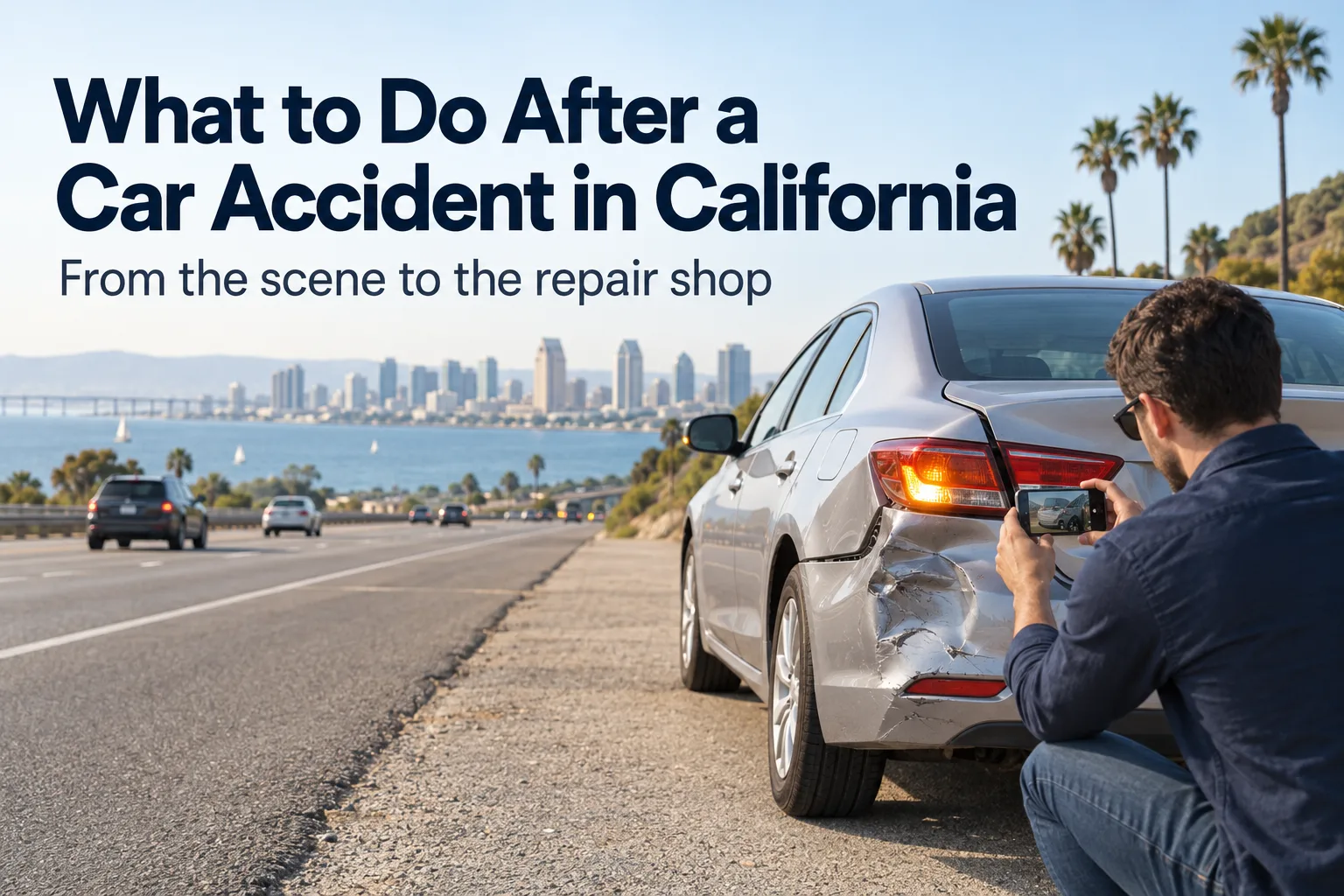
Get everyone safe, call 911 if anyone might be hurt, photograph everything before the cars move, swap information, report the claim to your insurer, and get the car inspected for damage you can't see. That's the order to follow after a car accident in California. The repair shop can wait until those are done. This is general information, not legal advice.
What to do after a minor car accident in California: the first hour
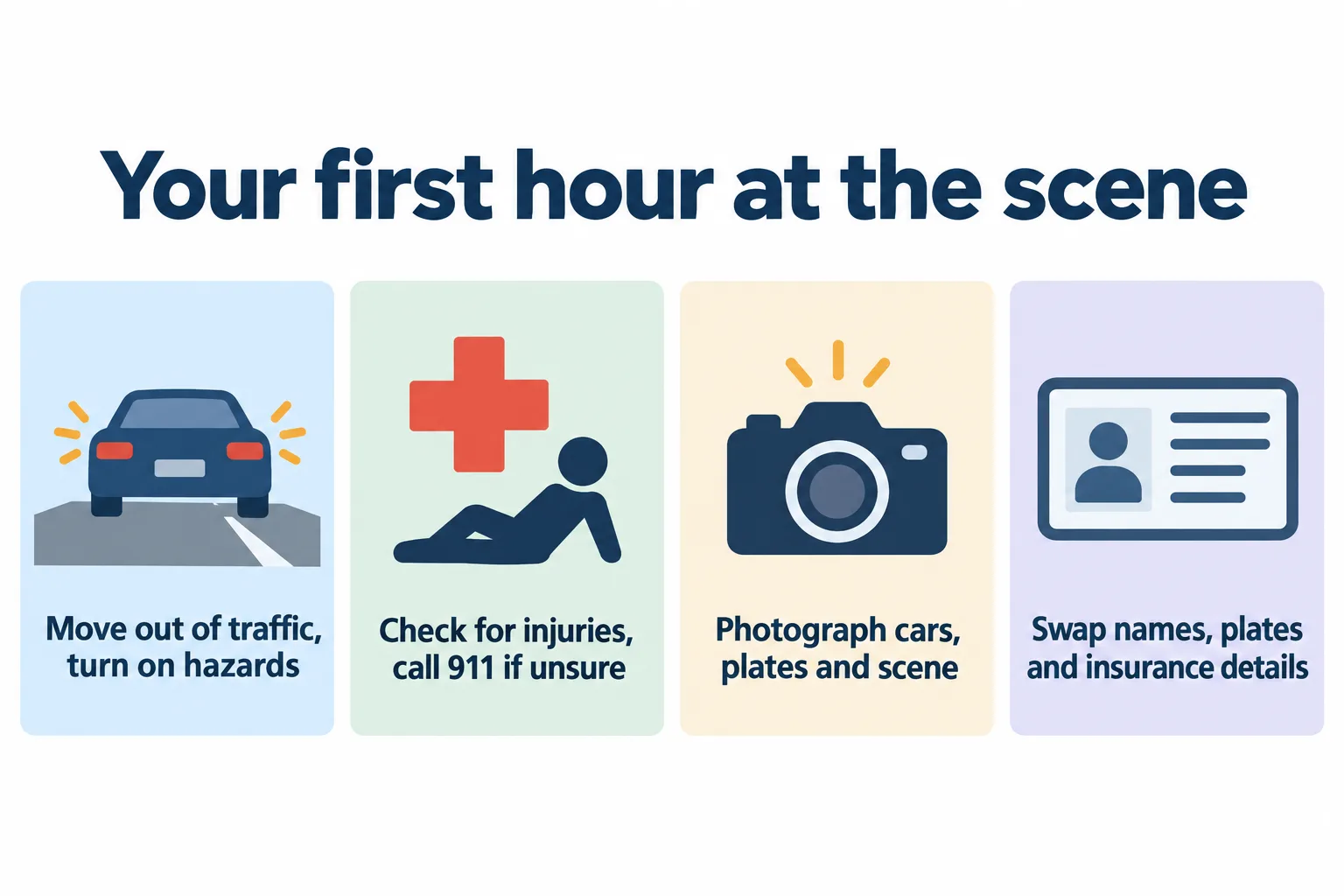
- Move out of traffic if the cars still drive. Pull to the shoulder or a side street and turn on your hazards. If a car won't move, get yourselves out and away from the lanes.
- Check for injuries before you check bumpers. Adrenaline hides pain. If anyone is hurt, or even unsure, call 911.
- Photograph before anything is moved, if it's safe. Start with a wide shot showing both cars and the road. Then take close-ups of each damaged area, both license plates, street signs, skid marks, and the other driver's insurance card and license.
- Get names, phone numbers, plate numbers and insurance details. If a witness stops, get their contact information too.
- Write down what happened while it's fresh. Note the time, your direction of travel, and what you saw. Memory gets fuzzy within a day.
That's the whole job at the scene. You're collecting facts, not deciding who was to blame.
Call the police after a fender bender when there's an injury, a dispute, or a driver who won't cooperate
Call 911 for any injury. Beyond that, ask for a police report in three situations: the other driver is arguing about what happened, they have no insurance or won't show it, or they seem impaired. A report gives your insurer a neutral record instead of two competing stories.
In a tiny parking-lot scrape where both drivers stay calm and trade information, officers may not come out. That doesn't mean you have nothing to do. California has DMV reporting rules for accidents involving injury or property damage above a set threshold, and the deadline is short. Check the DMV's current rules or ask your insurer rather than guessing.
What not to tell the insurance company after an accident
Report the accident promptly, but watch how you describe it. These habits cause the most trouble:
- Don't say “sorry” or “it was my fault” at the scene or on the phone. You may not have the full picture. Speed, lane position and right-of-way are often unclear in the moment.
- Don't say “I'm fine” if you haven't been checked. Say “I'm not sure yet” or “I'm going to get checked.” Soreness often shows up a day or two later.
- Don't guess. If you don't know how fast the other car was going, say so. A guess becomes a statement in the file.
- Don't accept a quick settlement from the other driver's insurer before the car is inspected. A bumper cover can look nearly fine while the absorber, brackets or sensors behind it are damaged. Once a claim is closed, reopening it can be hard.
- Don't sign anything you haven't read, especially a release.
Stick to what you personally know: where, when, what you saw, what the damage looks like. If a question is about fault, it's fine to say you'd like to review the facts first. For a walkthrough of how claims usually move, see our guide on insurance claim help after an accident.
Will my insurance pay if I'm at fault? It depends on which coverage you carry
Being at fault doesn't automatically mean you pay for everything out of pocket. What's covered depends on your policy:
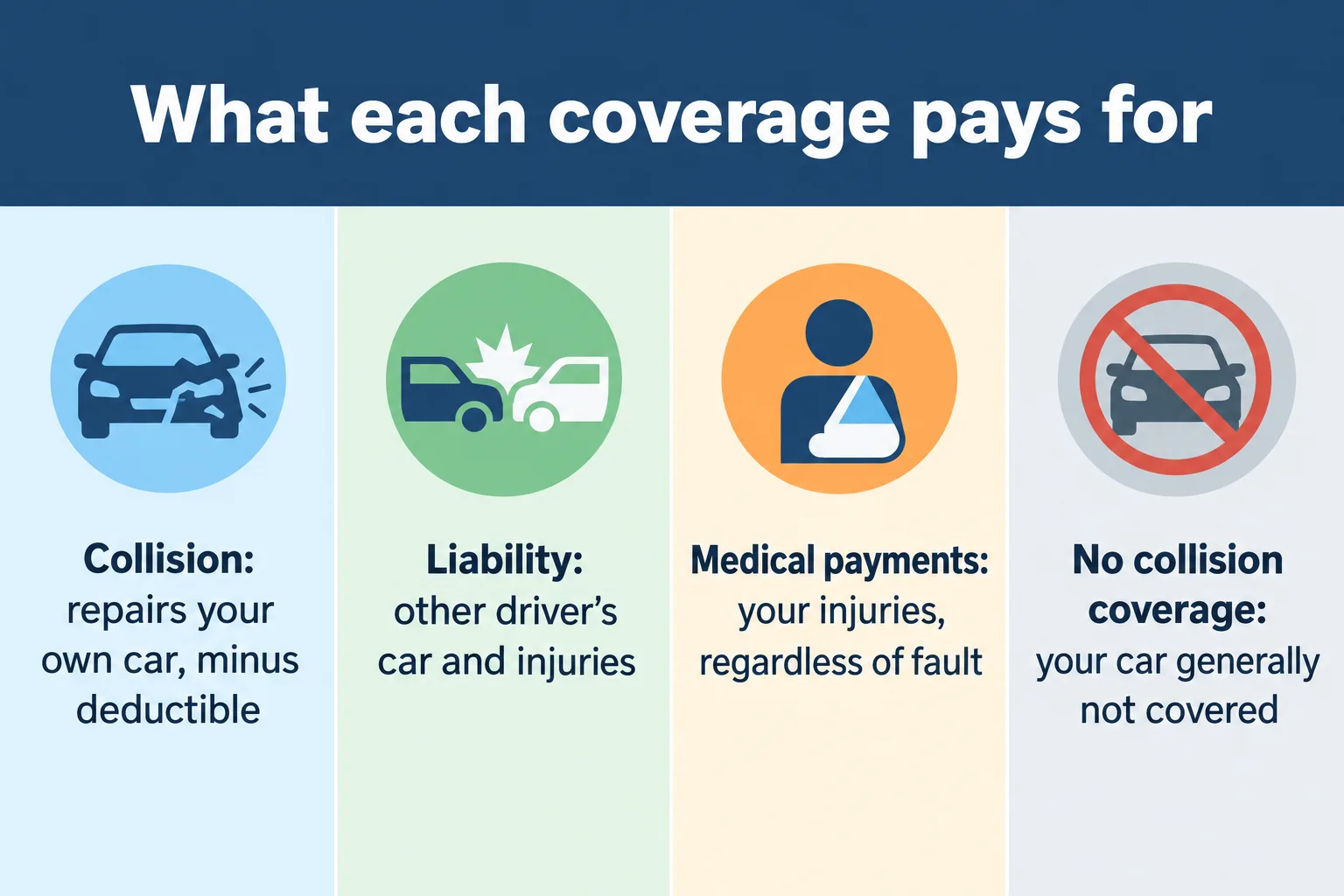
- Collision coverage pays to repair your own car after an accident you caused, usually minus your deductible. Without it, your own car's repair generally isn't covered when you're at fault.
- Liability coverage pays for the other driver's car and injuries, up to your limits. It doesn't pay for your car.
- Medical payments or similar coverage, if you have it, can help with your own injuries regardless of fault.
If you were not at fault, you can usually file against the other driver's insurer, or go through your own and let your insurer pursue them. Going through your own is often faster to start. Ask both insurers what each path means for your deductible and your record. Fault can also be shared, and insurers sometimes assign percentages. Don't treat their first read as final. If you disagree, say so and ask what evidence they used.
Get the car checked for what you can't see, especially if it drifts, pulls or throws a warning light
Some of the most expensive damage after a minor crash isn't visible from the driver's seat. Watch for:
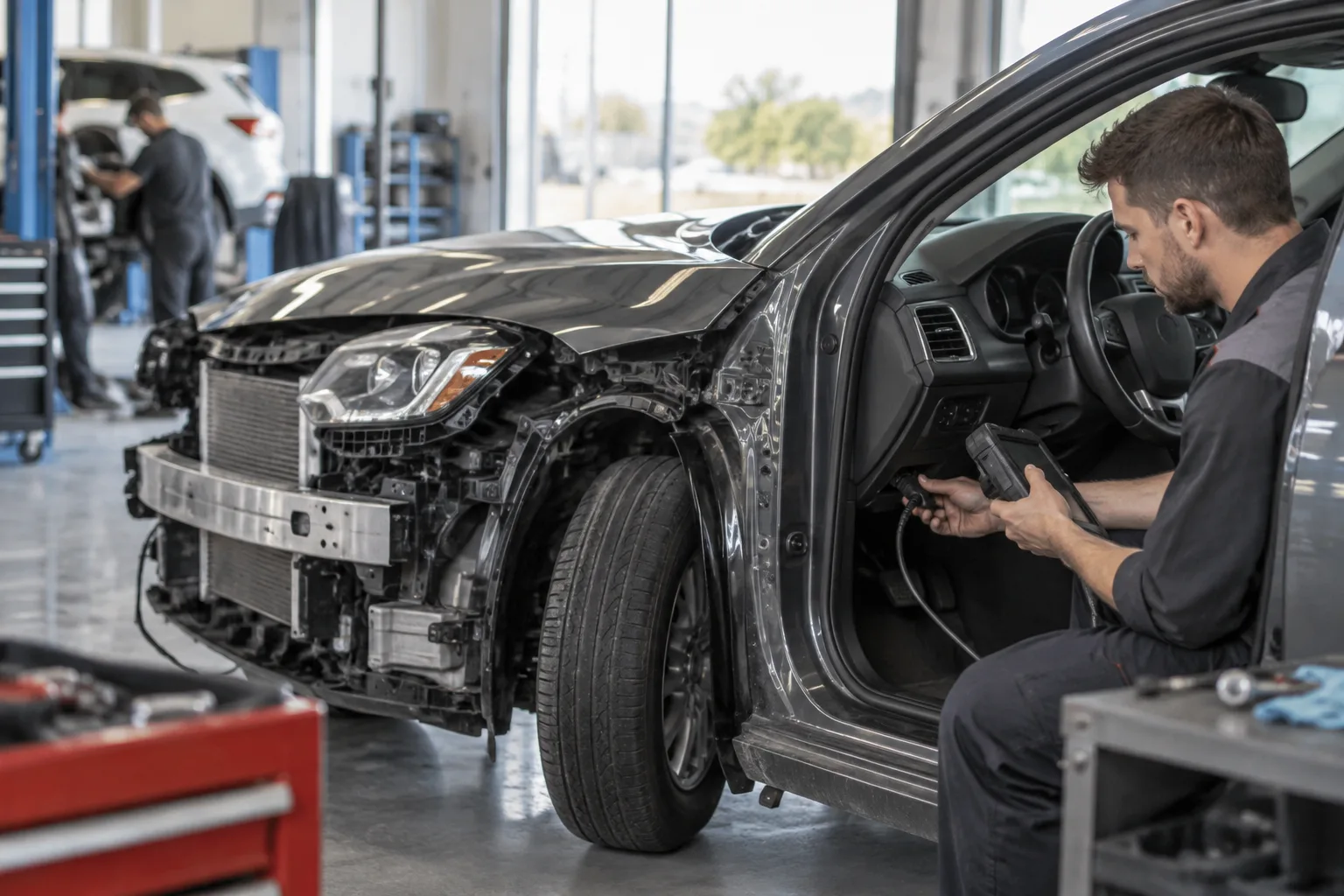
- Drifting or pulling on the freeway. That usually points to alignment or suspension damage from the impact.
- Uneven gaps around the hood, doors or trunk, which can suggest the structure moved.
- Doors or a trunk that stick or close differently than before.
- Dashboard warnings or sensors that act up, such as parking sensors, blind-spot alerts or lane cameras. Bumper and windshield work can throw these off, and they may need recalibration.
A proper inspection means scanning the car's systems, not just looking at the paint. If a shop says the repair is cosmetic only, ask whether they scanned the car and measured the structure.
In California, you choose the repair shop
Your insurer can suggest a shop, and some offer faster handling if you use one of theirs. But where your car gets repaired is your call. You don't need to decide at the scene, and you don't need to authorize anything on the first call with an adjuster.
Get an estimate from a shop you trust, then send it to your insurer. Estimates often change once panels come off and hidden damage shows up, and the shop usually sends the insurer an updated supplement for approval. That's normal. You can read the usual order of events on our collision repair process page.
Getting an estimate from San Diego Auto Repair & Collision
San Diego Auto Repair & Collision is at 3877 42nd St in City Heights, San Diego, and works with all insurance companies. It handles repairs from bumpers and dents to frame work, paint and luxury vehicles, and sends photo updates by text during repairs. Estimates are free, and you can see the full range of collision, paint, dent and frame services before you come in. To start, send photos through our contact page or call (619) 282-2400. You still choose the shop. We just want you to have a clear estimate to compare.
Questions people still ask after an accident
What should I do right after a minor car accident in California?
Make sure everyone is safe and call 911 if anyone may be hurt. Photograph the cars, plates and scene, exchange insurance and contact information, and report the claim to your insurer. Then have the car inspected, because some damage hides behind the bumper or under the car.
Should I call the police after a fender bender?
Call 911 if there's any injury, a dispute over what happened, an uninsured or uncooperative driver, or any sign of impairment. For a minor scrape where both drivers cooperate, police may not come. California still has DMV reporting rules for some accidents, so check the DMV's current requirements or ask your insurer.
What shouldn't I tell the insurance company?
Avoid admitting fault, saying you're uninjured before being checked, or guessing at speeds and distances. Stick to facts you know. Don't accept a quick settlement or sign a release before the car has been fully inspected.
Will insurance pay if the accident was my fault?
It depends on your coverage. Collision coverage typically pays for your own car's repairs minus the deductible, and liability coverage pays for the other party's damage and injuries. If you carry only liability, your own repairs generally aren't covered when you're at fault.
More articles
- Pick a City Heights Auto Body Shop by Its Process, Not Its Address
- Choosing an Auto Body Shop in San Diego: Read the Estimate
- ADAS Calibration After Windshield or Bumper Replacement
- BMW Collision Repair in San Diego: Dealer or Body Shop?
- Bumper Repair in San Diego: Repair or Replace?
- Paintless Dent Repair in San Diego: When It Works