Paintless Dent Repair in San Diego: When It Works
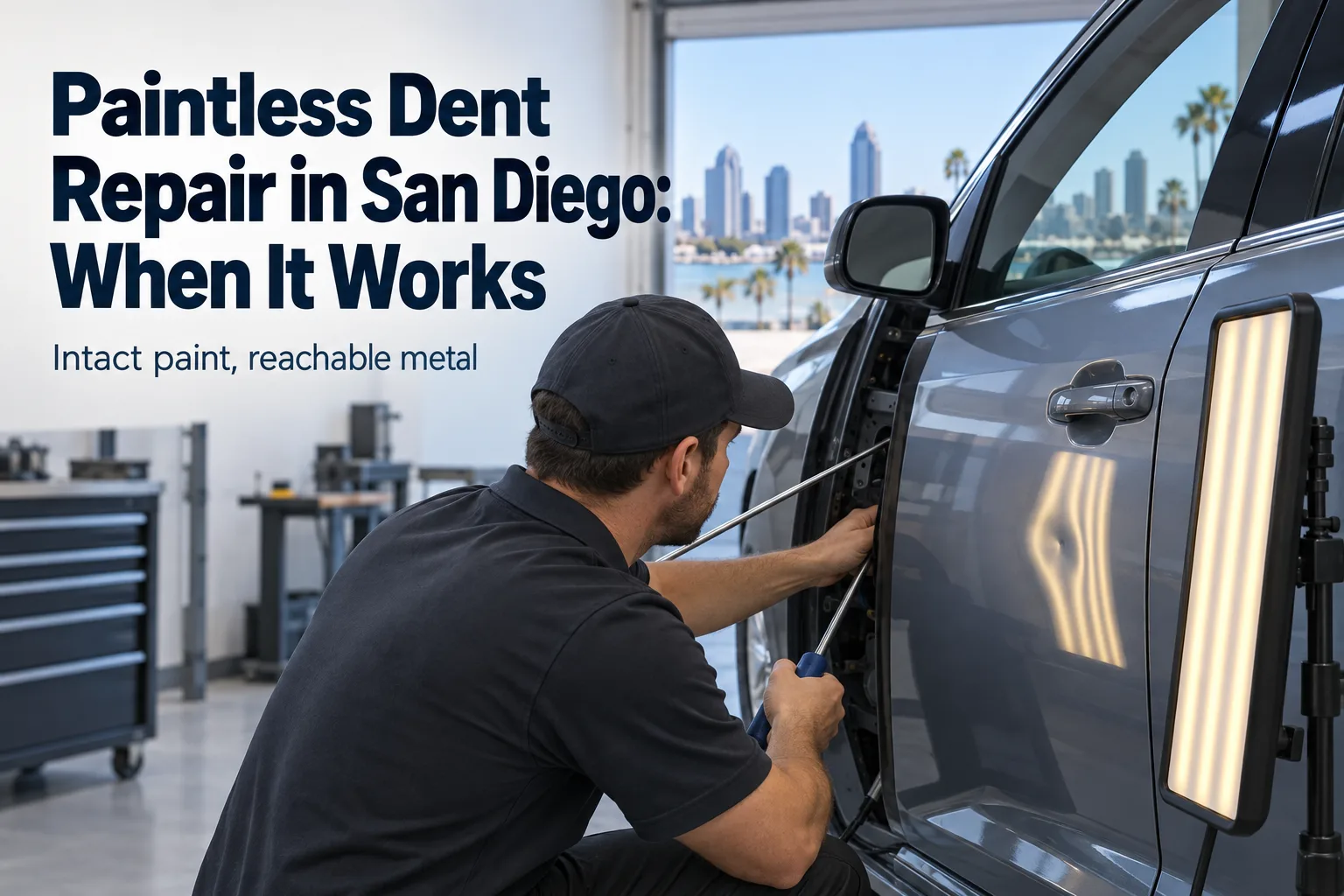
Paintless dent repair (PDR) works when the paint over the dent is still intact and a technician can get a tool behind the panel to push the metal back. When both are true, it is usually the best repair: no filler, no repainting, and your factory finish stays on the car. When either is false, you need traditional body work, and a cheap PDR attempt will only leave a visible wave. Cost depends on the dent, not on a standard rate. So judge your own dent first, then ask for a quote.
PDR works when the paint is unbroken and the tool can reach the back of the panel
The technician works the metal from behind with specialized tools, slowly pressing the low spot up until the surface is level again. Nothing is added. Nothing is sanded. That is why the original paint survives, and why the repair only makes sense when the paint is still sound.
Three quick checks you can do in your driveway:
- Look at the paint in good light. Cracks, chips or flaking inside the dent mean the finish is already broken. PDR cannot fix paint.
- Look at the shape. A soft, round, shallow dent, like a door ding or a shopping cart nudge, is the classic candidate. A sharp crease or fold is not.
- Think about access. The tool needs a path behind the dent. Doors and quarter panels often allow it. Double-layered areas, tightly braced edges and roof rails can be difficult or impossible.
Photos help a lot here. Shoot the dent from straight on, then from a low angle so the reflection shows its depth, and send them through the free estimate page.
Four things make a dent a bad candidate for PDR
Say yes to PDR only after ruling these out:
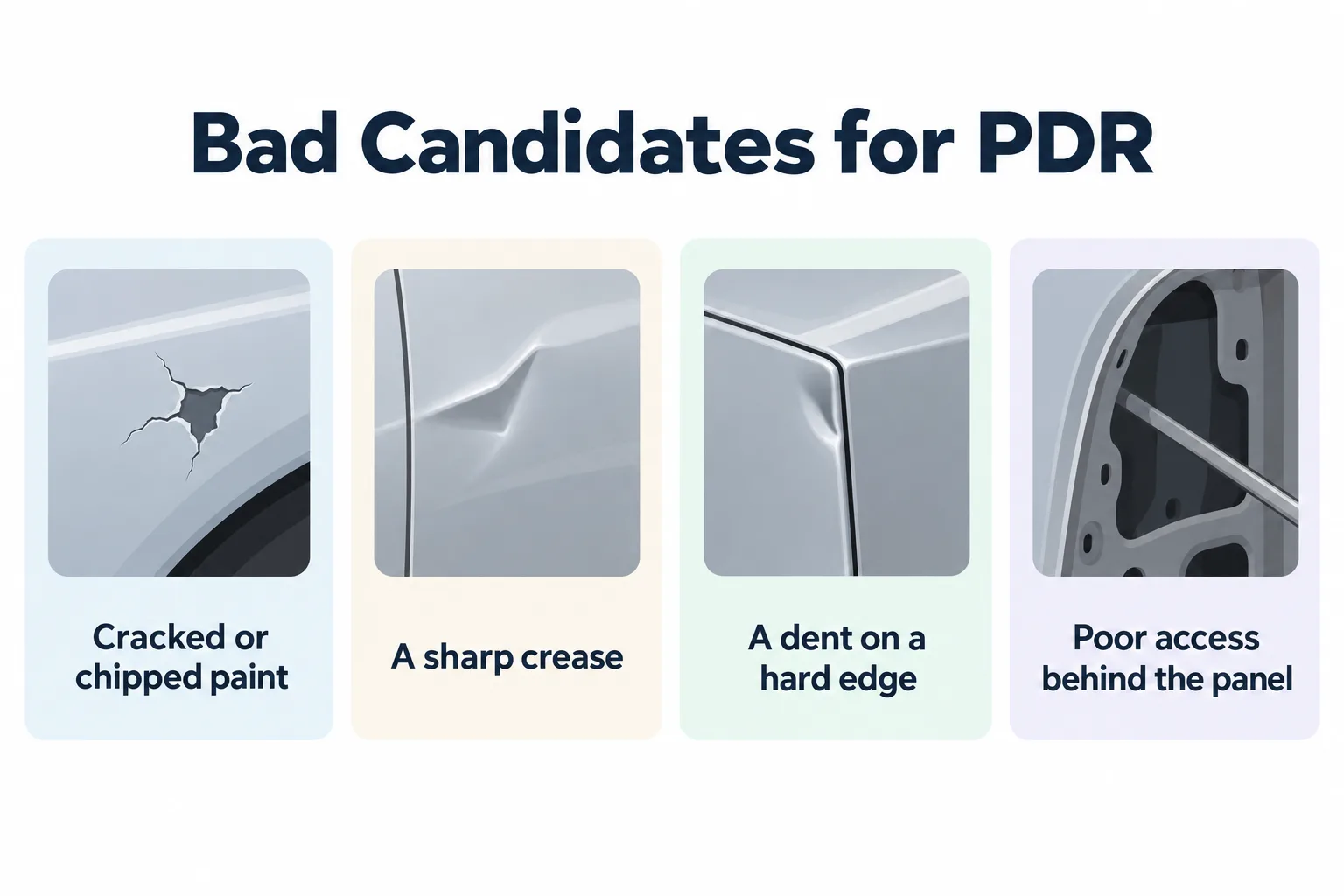
- Cracked or chipped paint. The dent can be pulled, but the damaged paint still needs refinishing, which means it is no longer a paintless repair.
- A sharp crease. When metal is folded rather than pushed in, it stretches. Stretched metal does not return to its shape cleanly, and forcing it can leave a ripple.
- A dent on a hard edge or body line. Edges are stiff, and the metal there resists being worked back. Results vary widely.
- Poor access. If the tool cannot reach, there is no clean way to push the dent out.
Material matters too. Aluminum panels are less forgiving than steel and can crack paint when worked, so a shop should look at the panel before promising anything. Anyone who says every dent can be fixed without paint is selling, not diagnosing.
When PDR is the wrong call, traditional body work is the answer. The dent is repaired, the area is refinished and the color is matched to the rest of the car. Our before and after gallery shows what that kind of repair looks like.
How much do PDR guys charge per dent? Beware any quote given without seeing the dent
People ask it everywhere: what is the average cost of PDR, how much would paintless dent removal cost, what do they charge per dent. We will not put a number on it here, because a number without a look at your car is a guess. The cost comes down to a handful of variables:
- Size. A small ding and a hand-sized dent are different jobs.
- Depth. A shallow dent releases easily. A deep one takes more passes.
- Location. A flat door skin is easier than a body line, and a panel with a brace behind it is harder than an open one.
- Count. Several dents on one panel are not simply several single-dent jobs. Quotes tend to get more complicated as the number rises.
- Panel material and condition. Aluminum, prior repairs and paint condition all affect the price.
A per-dent figure only means something once someone has looked at which dent it covers. Treat a flat price given sight unseen as a starting point to confirm, not a commitment. The honest process is simple: a look at the panel (or good photos), a straight answer on whether PDR will work, and a written estimate.
Is paintless dent repair worth it? Yes if it keeps your factory paint, no if it only hides a crease
The case for PDR is that your car keeps the paint it left the factory with. No color-match risk. No new clear coat meeting old. Nothing for a future buyer or inspector to spot. For a shallow dent on an accessible panel, that is hard to beat.
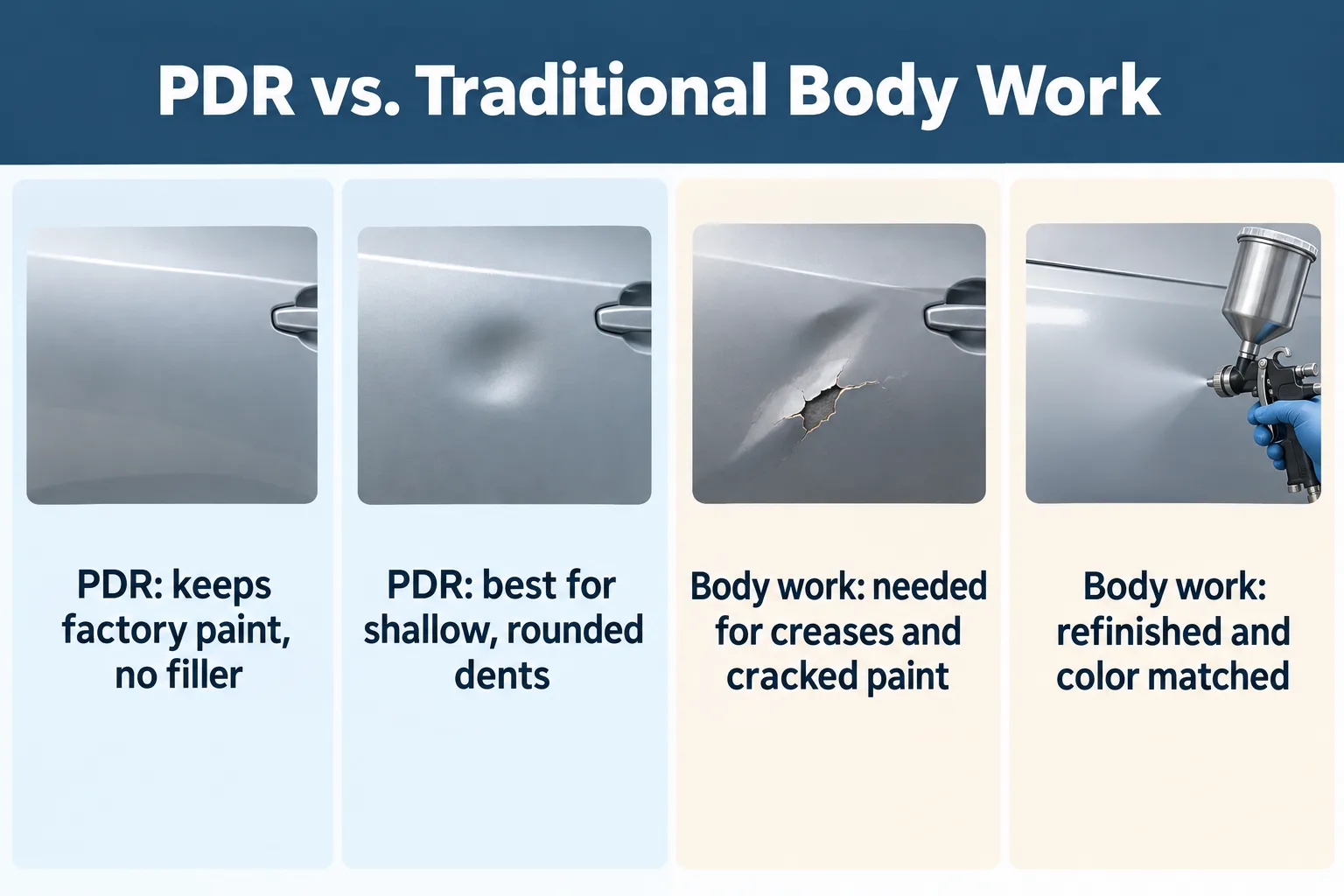
The case against is narrower than people think, but real. If a dent is creased, on an edge or surrounded by cracked paint, forcing PDR can produce a repair that looks fine from five feet and wrong from two. Better to pay for the right repair once than the wrong one twice.
One rule of thumb: if the dent has a smooth, rounded bottom and the paint is intact, ask about PDR first. If you can see a line in the middle of the dent, or the paint has cracked, expect body work to be part of the conversation.
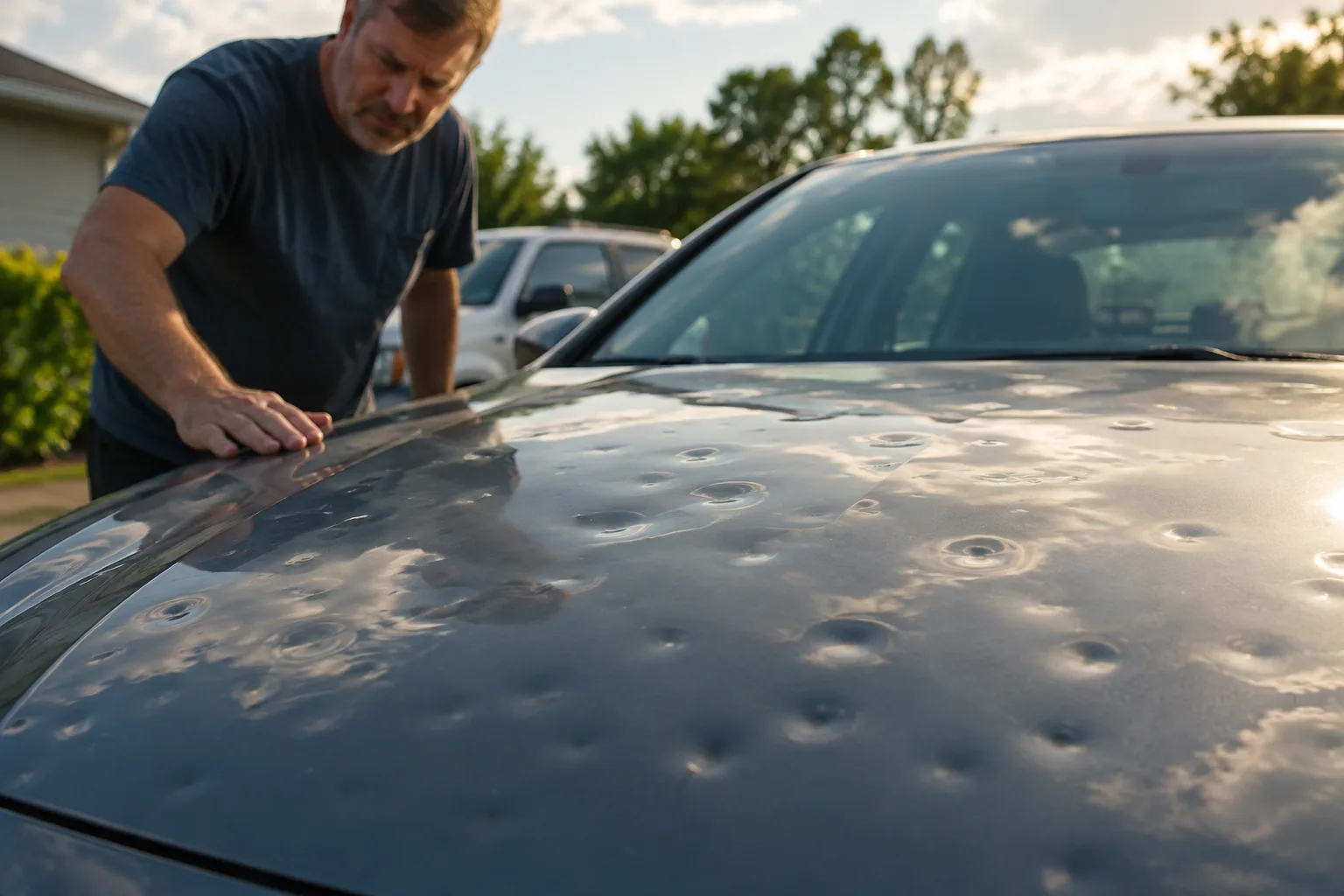
Hail damage is PDR's best case and its hardest test
Hail leaves many small, round, shallow dents across the roof, hood and trunk, usually with the paint intact. That is the shape PDR does best, and it can spare you from repainting whole panels. The test is density and depth. A panel covered in dents packed close together, or dents with stretched metal, may end up as a repaint or panel replacement instead.
Hail is also usually an insurance matter rather than an out-of-pocket one. Check your policy for how weather damage is covered and what your deductible is, because the repair estimate set against that deductible often decides how you proceed. Our page on insurance claims after an accident explains the steps in plain English. In California, the choice of repair shop is yours, whatever shop an insurer might suggest.
Where San Diego Auto Repair & Collision fits
San Diego Auto Repair & Collision, at 3877 42nd St in City Heights, handles dent repair as paintless where possible, including hail damage and door dings, and as traditional body work when PDR will not do the job. Small dings and big dents are both in scope, and the estimate is free. The shop works with all insurance companies and sends photo updates by text during repairs. Paint work carries a lifetime paint warranty. Send photos at /contact or call (619) 282-2400.
Questions people still ask about paintless dent repair
What is the average cost of PDR?
There is no reliable average, because the price depends on the dent's size, depth, location and number, plus the panel material. To get a real number, ask for a free estimate based on photos or an in-person look.
Is paintless dent repair worth it?
Yes, when the paint is intact, the dent is shallow and rounded, and the technician can reach behind the panel. You keep the factory finish and skip repainting. It is not worth forcing on creased dents, hard edges or cracked paint.
Where can I get small dings and dents repaired on my car?
Start with a body shop that does both paintless and traditional repair, since it can tell you which one fits your dent. Send a few photos, one straight on and one at a low angle, and ask whether PDR will work before you commit to anything.
More articles
- Pick a City Heights Auto Body Shop by Its Process, Not Its Address
- Choosing an Auto Body Shop in San Diego: Read the Estimate
- ADAS Calibration After Windshield or Bumper Replacement
- BMW Collision Repair in San Diego: Dealer or Body Shop?
- Bumper Repair in San Diego: Repair or Replace?
- What to Do After a Car Accident in California