Choosing an Auto Body Shop in San Diego: Read the Estimate
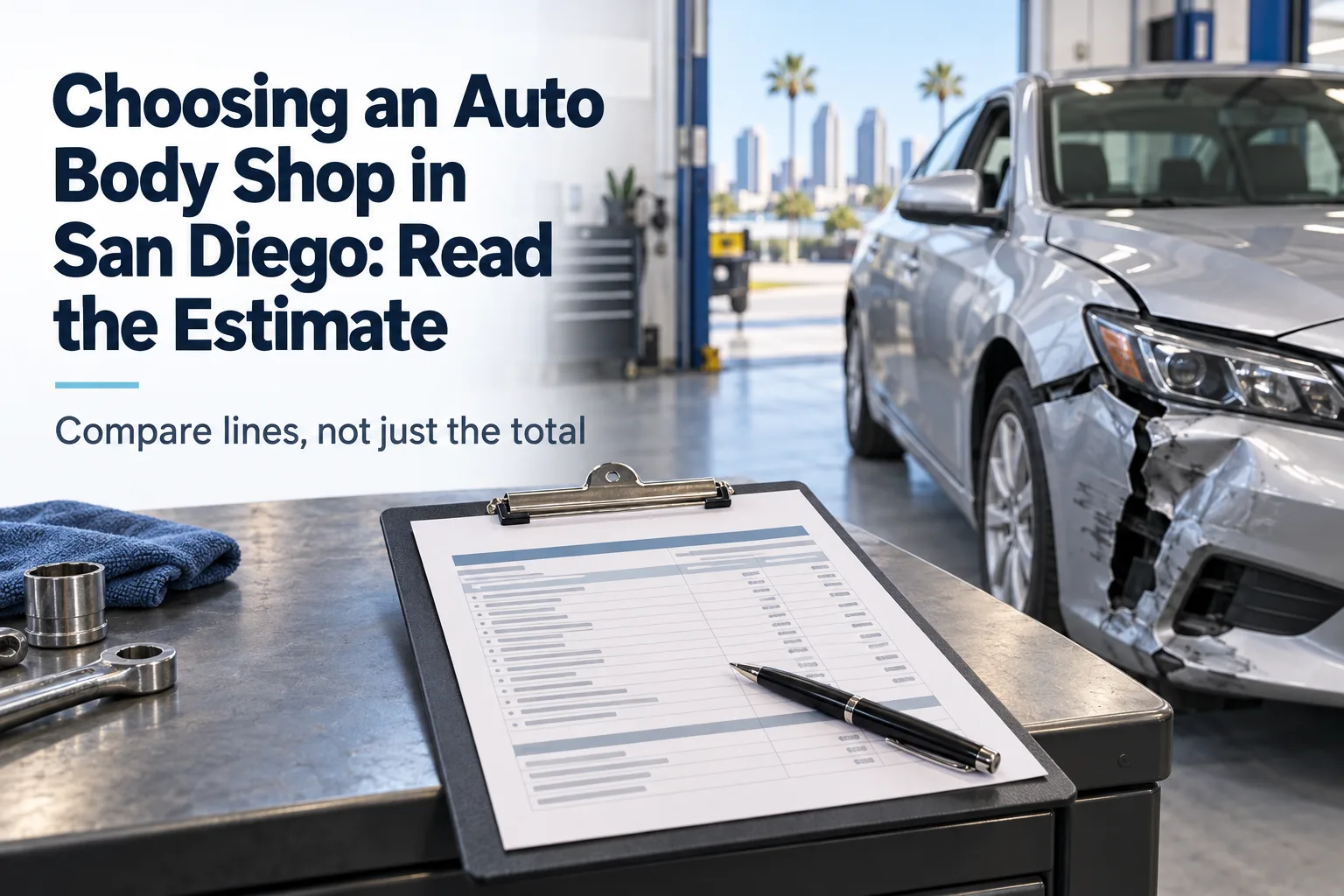
Compare itemized estimates line by line and ask five specific questions before you hand over the keys. That is how you choose an auto body shop in San Diego. Reviews and a friend's recommendation help, but the estimate shows what the shop plans to do to your car. The total at the bottom tells you the least.
Been asking around for a reasonable-price shop? Here is the practical version: what to compare, what a cheap quote may be leaving out, and who actually decides where your car goes.
Compare the lines on the estimate, not the total
Two shops can look at the same bumper and write quotes that are far apart. Usually they are not quoting the same repair. Ask each shop for an itemized estimate and check these lines:
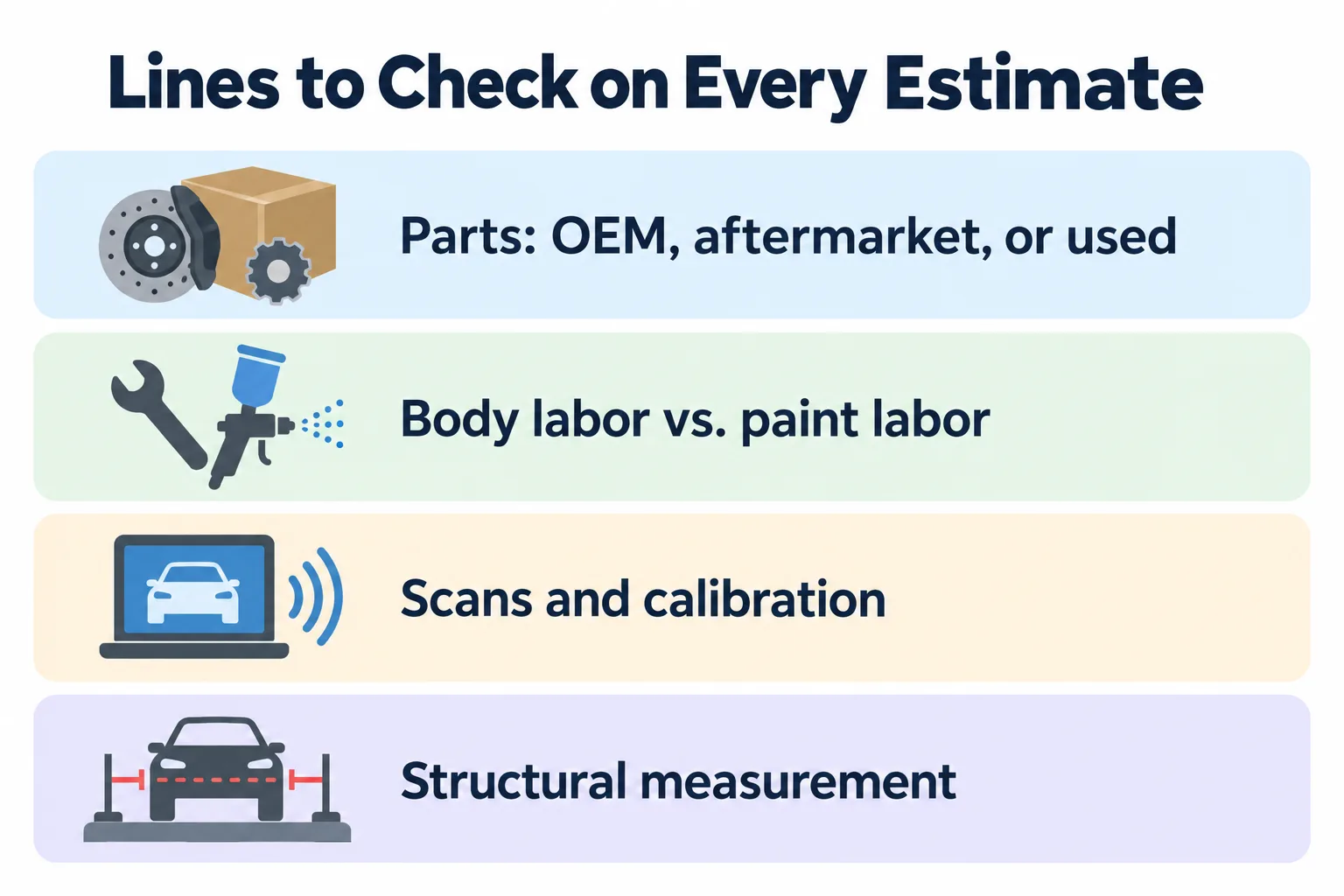
- Parts: Is each part listed as OEM (made by the carmaker), aftermarket, or used? Fit, finish and sometimes safety-system behavior can differ, and the price difference usually comes from this line.
- Body labor vs. paint labor: Are they listed separately, and does the paint line include blending into the neighboring panel so the color matches?
- Scans and calibration: Does the estimate mention a diagnostic scan, and, if your car has cameras or radar, recalibration afterward?
- Structural measurement: If the hit was hard enough to bend anything underneath, is there any mention of measuring the frame or unibody?
A one-line estimate that says only “repair front end” gives you nothing to compare. Treat it as a missing answer, not a bargain.
A very low quote usually leaves something out
A quote can be low for honest reasons, like a smaller shop or a simpler repair. It can also be low because a step got skipped. These are the usual ones:
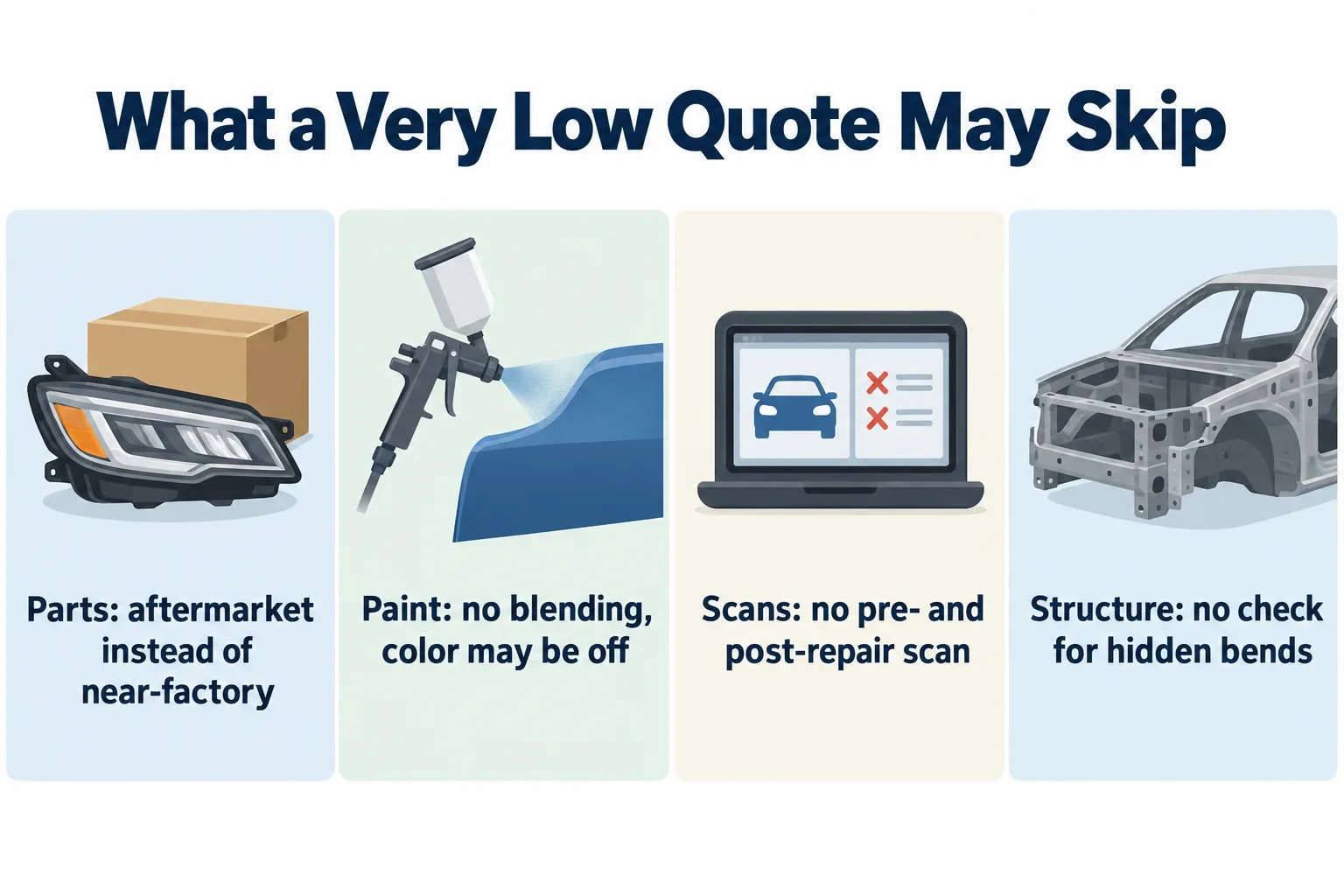
- Aftermarket parts where your car needs something closer to factory.
- No blending, so a freshly painted door sits next to a fender that is a shade off in San Diego sun.
- No pre- and post-repair scan, so a warning light or a misaligned sensor shows up after you have driven away.
- No structural check, which matters on unibody cars, where hidden bends change how the car handles and how it protects you in the next crash.
Once the car is painted, you cannot see most of this. So the estimate, and the shop's willingness to explain it, count for more than the first number you hear.
Expect the estimate to change, and ask how the shop handles it
Many first estimates are written before anything comes apart. Take the bumper cover off and a technician may find a bent reinforcement bar or a cracked bracket behind it. The shop then sends the insurer an added-damage request, called a supplement. That is normal. What matters is whether the shop tells you, explains it, and gets approval before doing the extra work.
Paying out of pocket? Ask the same thing: If you find more damage after teardown, will you call me before continuing? A good shop says yes without hesitating.
If you are going through insurance, the collision repair and insurance claim page walks through the order of events: estimate, insurer approval, parts, repair, and where supplements fit in.
In California, you choose the shop
Your insurance company may hand you a list of preferred shops, and some of them are good. But in California the customer chooses the repair shop. Using the insurer's suggested shop is a convenience, not a requirement. For the full picture, read can your insurance company make you use their body shop. This is general information, not legal advice. If a claim is in dispute, your insurer or an attorney is the right person to ask.
In practice, you can get an estimate from the shop you trust, then let that shop deal with your insurer on the paperwork.
Ask these five questions before you drop off the car
- Can I see the itemized estimate? Get it in writing, not as a verbal number.
- Which parts will you use, and can I choose? OEM, aftermarket and used parts should each be named.
- Will the panels next to the repair be blended for color match? Ask this about any paint job. Then ask what the paint warranty covers and for how long.
- Do you scan the car before and after, and recalibrate cameras and sensors if needed? This matters most on newer cars.
- How will you keep me updated? A repair can take a while. Vague answers about progress now usually mean vague answers later.
Ask to see finished work, too. A shop that is proud of its paint will have before-and-after photos to show.
Match the shop to the damage, not just the neighborhood
A door ding with no paint damage may not need a body shop at all. Paintless dent repair works on many of them, and a shop that does it can tell you honestly whether yours qualifies. A hard hit that moved a wheel or changed how the doors close needs computerized frame measuring, not just a new bumper. And a BMW, Mercedes-Benz, Lexus, Porsche or Audi with driver-assist cameras belongs at a shop that follows manufacturer repair procedures. Otherwise the safety systems may not work as designed.
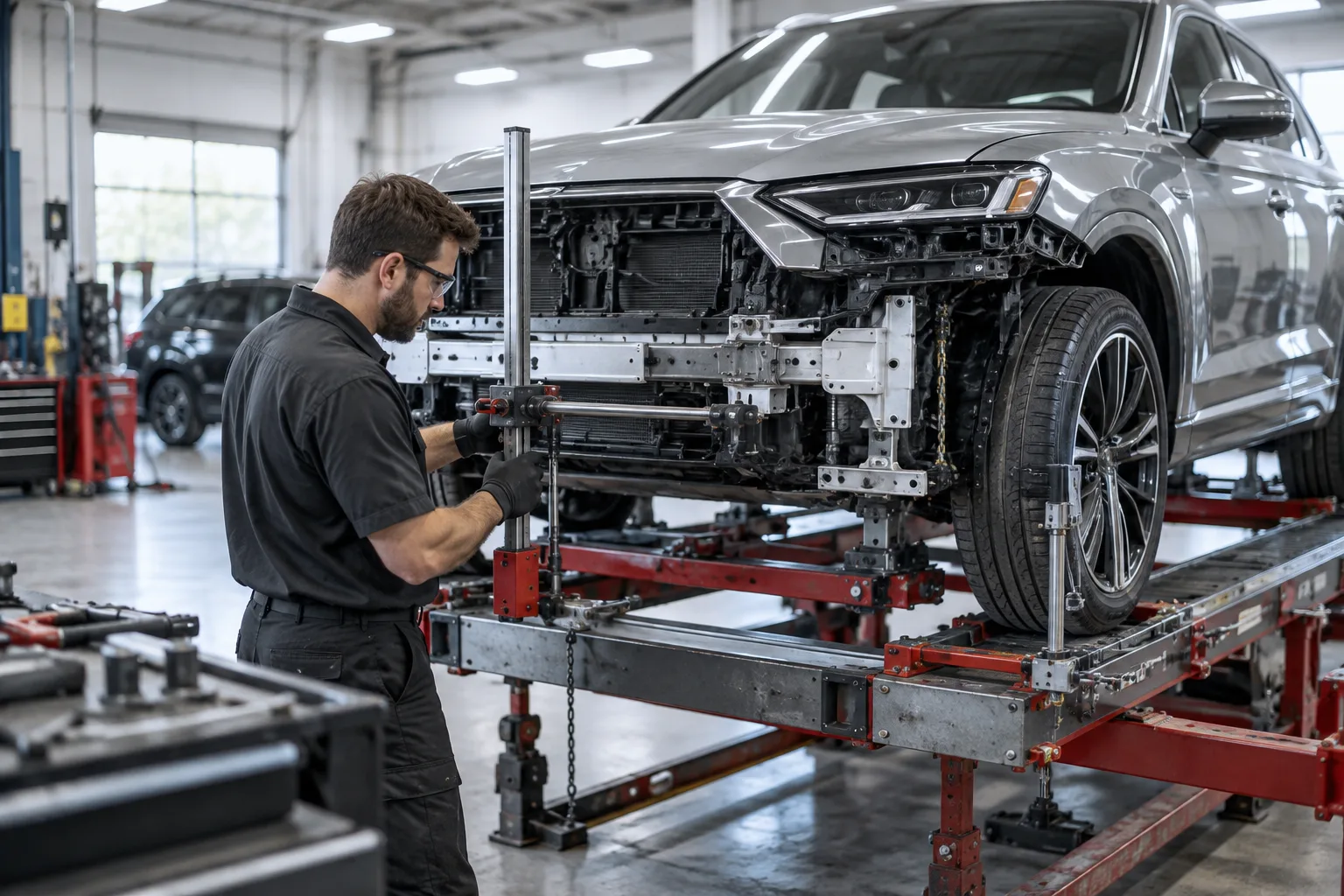
One more thing to watch for. If your car drifts on the freeway after a collision, the damage may reach the steering or suspension, not only the body. Make sure the shop checks.
Where San Diego Auto Repair & Collision fits
San Diego Auto Repair & Collision is at 3877 42nd St in City Heights, San Diego, and works with drivers in North Park, University Heights, Normal Heights, Kensington, Talmadge, Hillcrest, South Park, Golden Hill and the College Area. Estimates are free. The shop works with all insurance companies, sends photo updates by text during repairs, and backs paint work with a lifetime paint warranty. You can see how a job moves from estimate to final inspection on the repair process page, or browse everything the shop handles on the services page.
To get an estimate, send photos or book a time at /contact, or call (619) 282-2400. You choose the shop, so take the estimate home and compare it with others before you decide.
Common questions
How do I know if a body shop's quote is fair?
Ask for an itemized estimate and compare it with at least one other shop, line by line. Check the part types, paint and blend labor, scans or calibration, and any structural measuring. A quote is fair when it covers the same repair as the others and the shop can explain every line. A total far below the rest usually means a step is missing.
How long will my repair take?
No honest shop can promise a number before the car is opened up. Time depends on how much damage turns up after teardown, how quickly parts arrive, and how fast the insurer approves added work. Skip asking for a date the shop cannot guarantee. Ask how it will keep you updated along the way.
Do I have to use the shop my insurance company recommends?
No. In California the customer chooses the repair shop. Your insurer may suggest shops, but you can take the car to the one you prefer, and that shop can handle communication with the insurer for you. For a dispute about your specific claim, talk to your insurer or an attorney.
Do body shops work on trucks as well as cars?
Many do, but confirm before you drive over. Ask whether the shop works on your make and model, and send photos so they can tell you what they see. If the damage is mostly at the front or rear, our guide to bumper repair versus replacement is the next thing to read.
More articles
- Pick a City Heights Auto Body Shop by Its Process, Not Its Address
- ADAS Calibration After Windshield or Bumper Replacement
- BMW Collision Repair in San Diego: Dealer or Body Shop?
- Bumper Repair in San Diego: Repair or Replace?
- Paintless Dent Repair in San Diego: When It Works
- What to Do After a Car Accident in California