Pick a City Heights Auto Body Shop by Its Process, Not Its Address
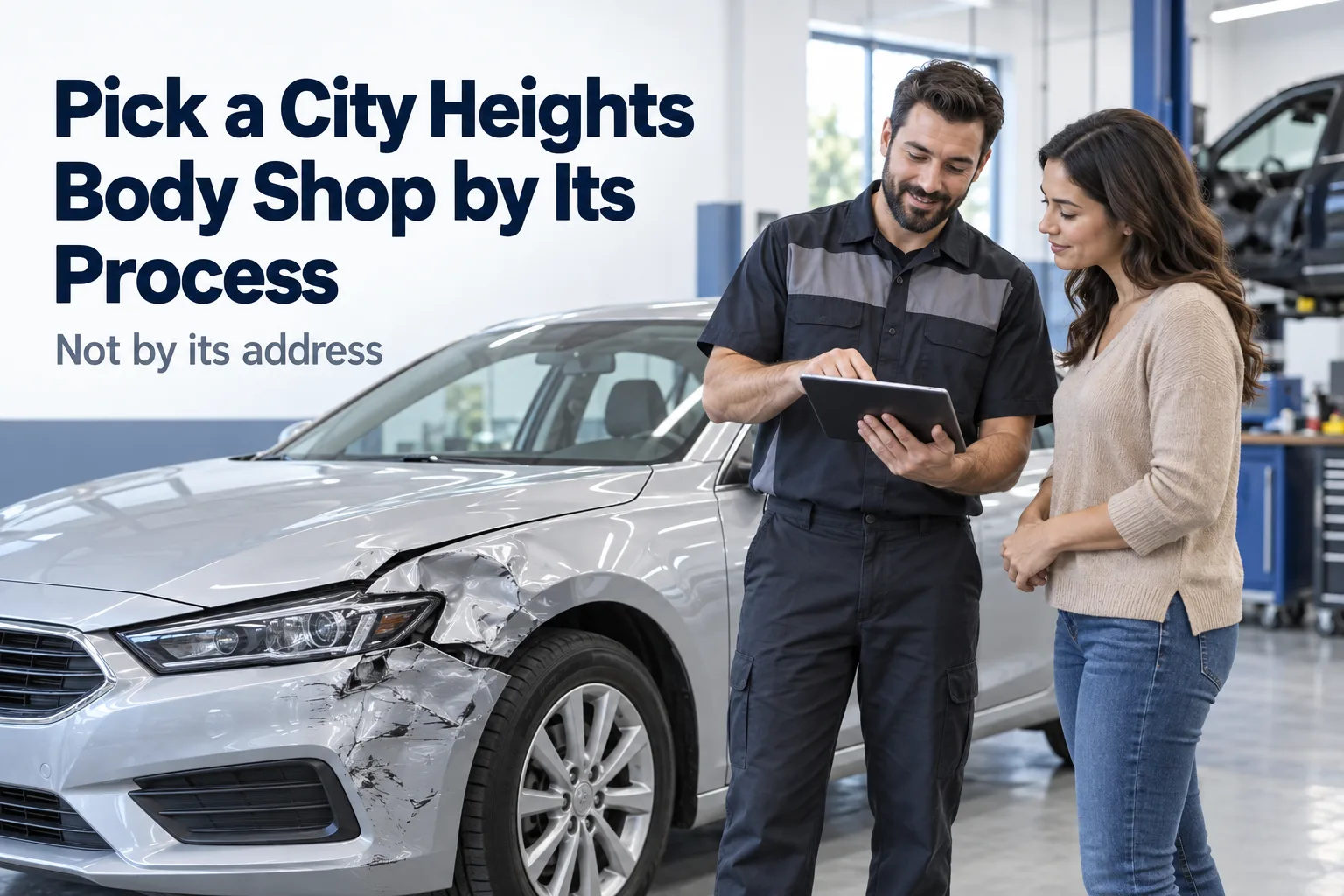
Before you hand over the keys, ask a City Heights auto body shop three things: how it will find damage it can't see yet, who will deal with your insurance company, and what it will put in writing. Being close to home is a fair tiebreaker. As a first filter it's weak. A shop five minutes away that hands you a vague estimate will cost you more trouble than one ten minutes away that explains every line.
Here is how to sort shops quickly, whether you're standing in a parking lot after a collision or just tired of a crumpled bumper.
Treat the first estimate as a starting point and ask about supplements
Nobody can see everything behind a crushed fender. Once a shop pulls off the bumper cover and panels, it often finds bent brackets, cracked mounts or sensor damage that were hidden. The shop then sends your insurer a request for the extra work. In the trade, that request is called a supplement.
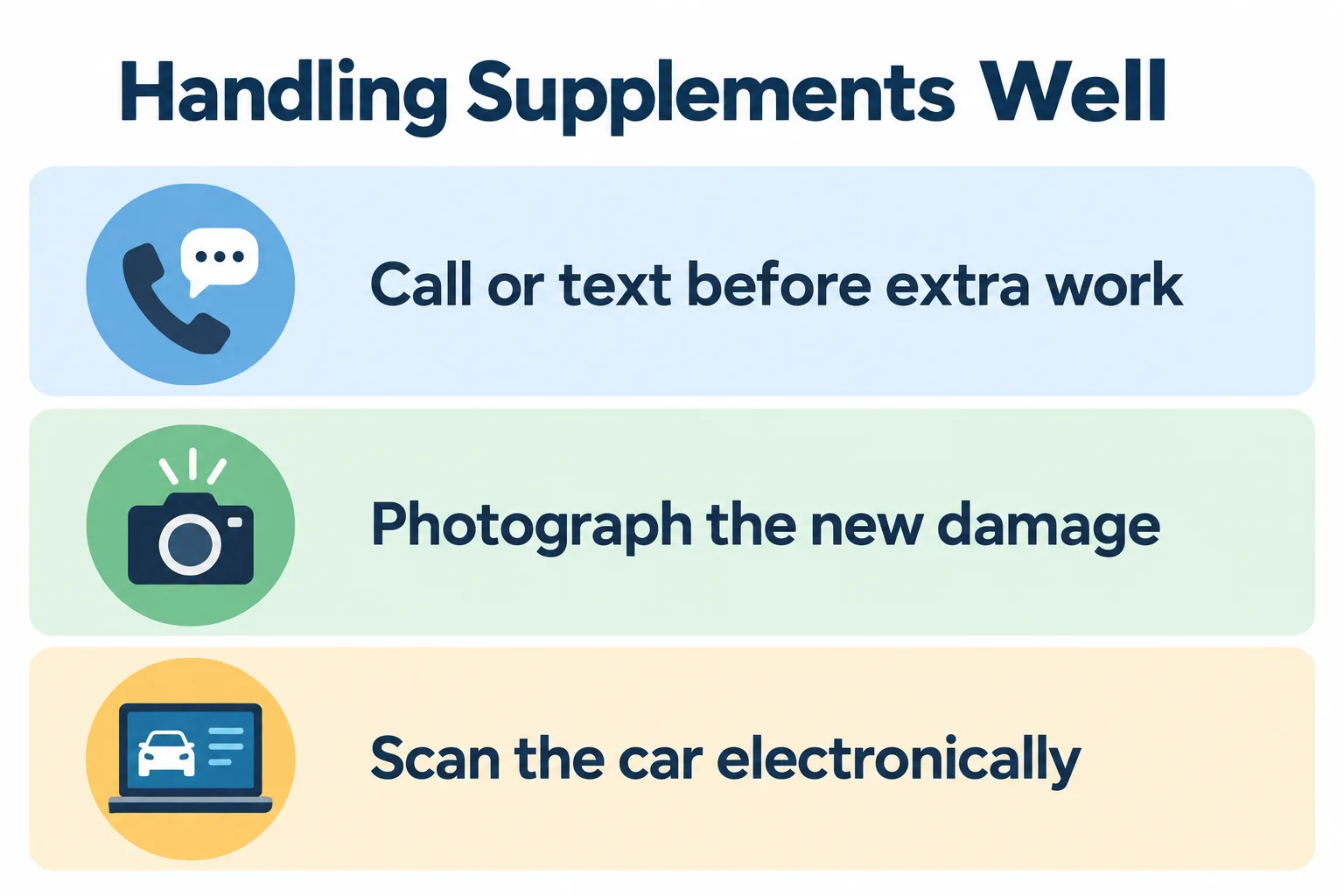
Supplements are normal. A shop that swears it will never have one is guessing, or hoping you won't ask. What you want to hear is how it handles them:
- Will it call or text you when it finds more damage, before the work goes ahead?
- Does it photograph the new damage so you can see what the insurer is being asked to approve?
- Does it scan the car electronically, not just look at it, so hidden electronic faults come up?
If the answer to all three is a shrug, keep looking. The collision repair process page shows how a full job is supposed to flow, from inspection through the final road test.
The shop on your insurer's list is a suggestion, not a requirement
Many insurers hand you a list of preferred shops as soon as you report a claim. In California, the customer chooses the repair shop. Use the list or ignore it. This is general information, not legal advice. If a claims rep pushes you toward one shop, ask them to explain in plain words what they want and why.
Some advice says to take whatever gets you back on the road fastest. Don't. The fastest start isn't always the best repair. Pick the shop you trust to explain the work, then let it deal with the insurer. For the full picture, read Can Your Insurance Company Make You Use Their Body Shop? and the page on insurance claim help after an accident.
Ask three questions about parts and paint before you sign anything
These three questions separate shops that plan the repair from shops that just start it.
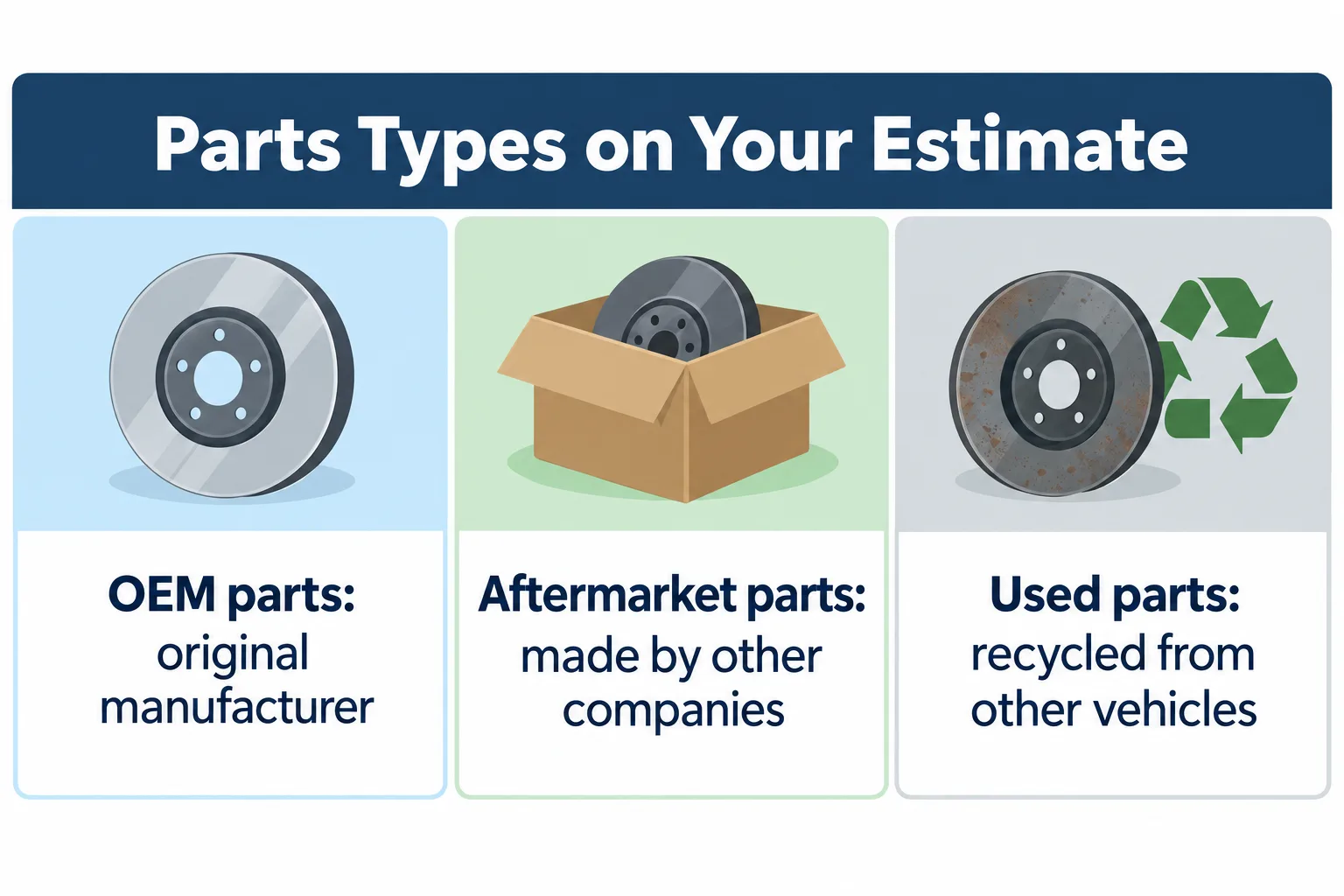
- What kind of parts will go on the car? Original manufacturer (OEM) parts, aftermarket parts and used parts are not the same thing, and your insurance policy may speak to which are allowed. Ask for the type to be listed line by line on the estimate, so pickup day holds no surprises.
- How will the paint match? A good match takes more than the color code. Paint fades with age and sun, so a shop usually has to blend the new paint into the neighboring panels. Ask whether it blends. Then ask to see a finished car in daylight, not under shop lights.
- What does the paint warranty cover, and is it in writing? A verbal promise is worth about what you paid for it. Get the terms on paper.
The same logic applies to a scratch, a faded clear coat or one damaged panel. A shop that does auto painting well can tell you how it matches the factory finish before it mixes anything.
Judge the repair when you pick the car up, not only the quote
A fair price on paper means nothing if the car comes back wrong. Before you pay and drive off, walk around it in outdoor light and check:
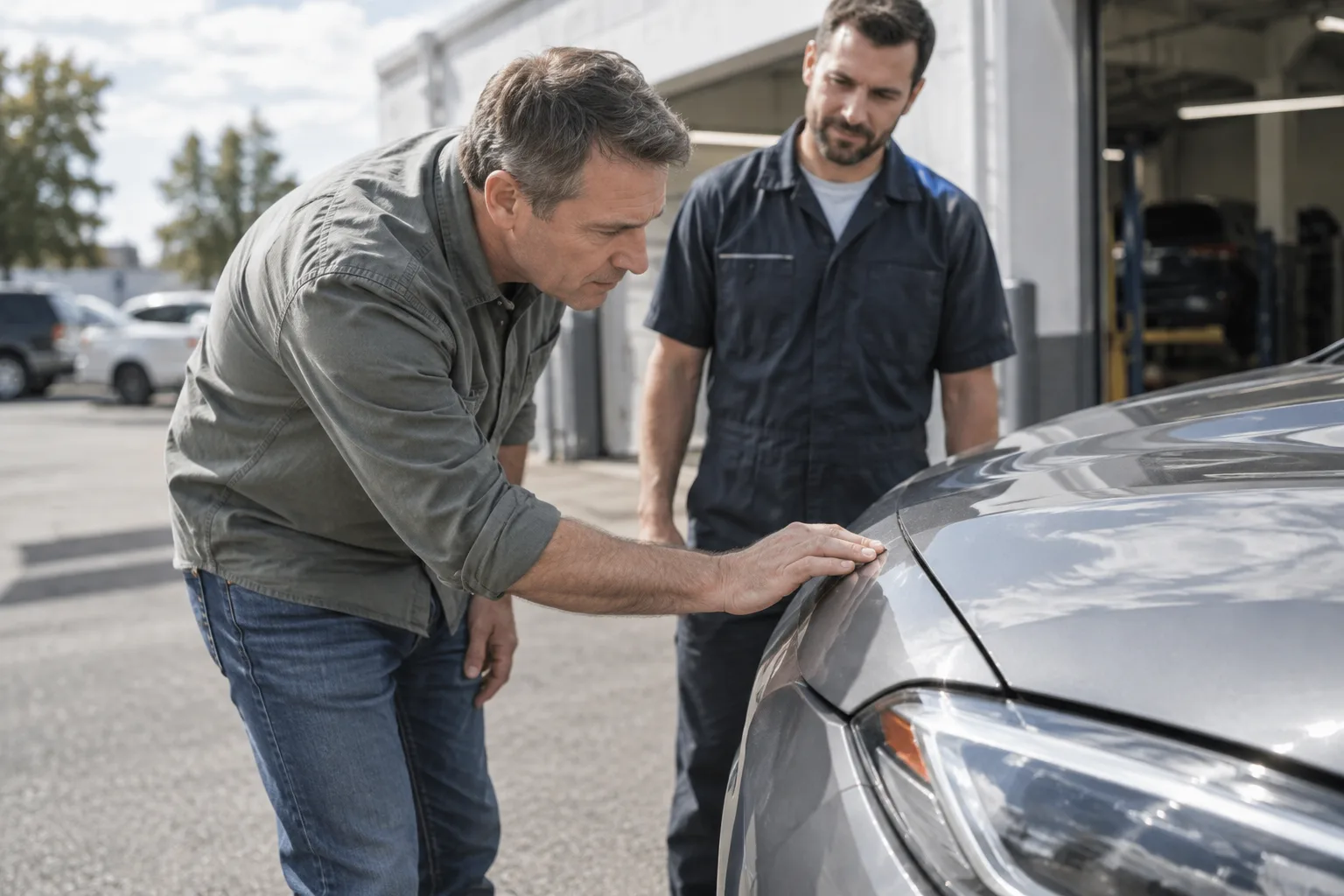
- Panel gaps. The space between the hood and fender, or door and quarter panel, should look even side to side.
- Color and texture. Look for a visible edge, a slight tone difference or orange-peel texture that doesn't match the panel next to it.
- Dashboard warning lights. Any new light after a collision deserves a question. Cars with cameras and radar behind the bumper or windshield may need recalibration after repair.
- How it drives. If the car drifts on the freeway or the steering wheel sits off-center, that usually points to alignment or suspension damage from the hit. Tell the shop right away, and see steering and suspension repair after an accident for what that involves.
Structural damage is the other thing you can't judge by eye. If the hit was hard enough to push the car out of line, ask how the shop measures the frame. Frame repair done to factory specs relies on measuring, not eyeballing.
Use distance as a tiebreaker, and here is why it still counts
When two shops answer your questions equally well, take the closer one. Nearby means an easy drop-off, an easy look at your car mid-repair if you want one, and less hassle if you spot something at pickup. To get better at reading what a shop gives you in writing, see Choosing an Auto Body Shop in San Diego: Read the Estimate.
Where San Diego Auto Repair & Collision fits
San Diego Auto Repair & Collision is at 3877 42nd St in City Heights, San Diego, and works with drivers from North Park, University Heights, Normal Heights, Kensington, Talmadge, Hillcrest, South Park, Golden Hill and the College Area. It handles collision repair from fender benders to major collisions, and it works with all insurance companies. Paint work carries a lifetime paint warranty, and you get photo updates by text during the repair. It also repairs BMW, Mercedes-Benz, Lexus, Porsche and Audi vehicles following manufacturer procedures, including ADAS sensor and camera recalibration. Estimates are free. The choice of shop is yours, so hold it up against any other shop using the questions above. To book, use the estimate request page or call (619) 282-2400.
Questions people still ask
Do I have to use the body shop my insurance company recommends?
No. In California the customer chooses the repair shop. Your insurer may suggest shops, and you're free to consider them, but you decide where the car goes. This is general information, not legal advice.
How do I know if a City Heights body shop will find all the damage?
Ask how it handles supplements and whether it scans the car electronically. A reliable shop expects extra damage to appear once panels come off, tells you when it does, and shows you photos of what it found.
Can a local shop repair trucks and luxury cars, or only regular sedans?
It depends on the shop, so ask about your exact make and model. For brands like BMW, Mercedes-Benz, Lexus, Porsche and Audi, ask whether repairs follow manufacturer procedures, including ADAS sensor and camera recalibration.
More articles
- Choosing an Auto Body Shop in San Diego: Read the Estimate
- ADAS Calibration After Windshield or Bumper Replacement
- BMW Collision Repair in San Diego: Dealer or Body Shop?
- Bumper Repair in San Diego: Repair or Replace?
- Paintless Dent Repair in San Diego: When It Works
- What to Do After a Car Accident in California