Bumper Repair in San Diego: Repair or Replace?
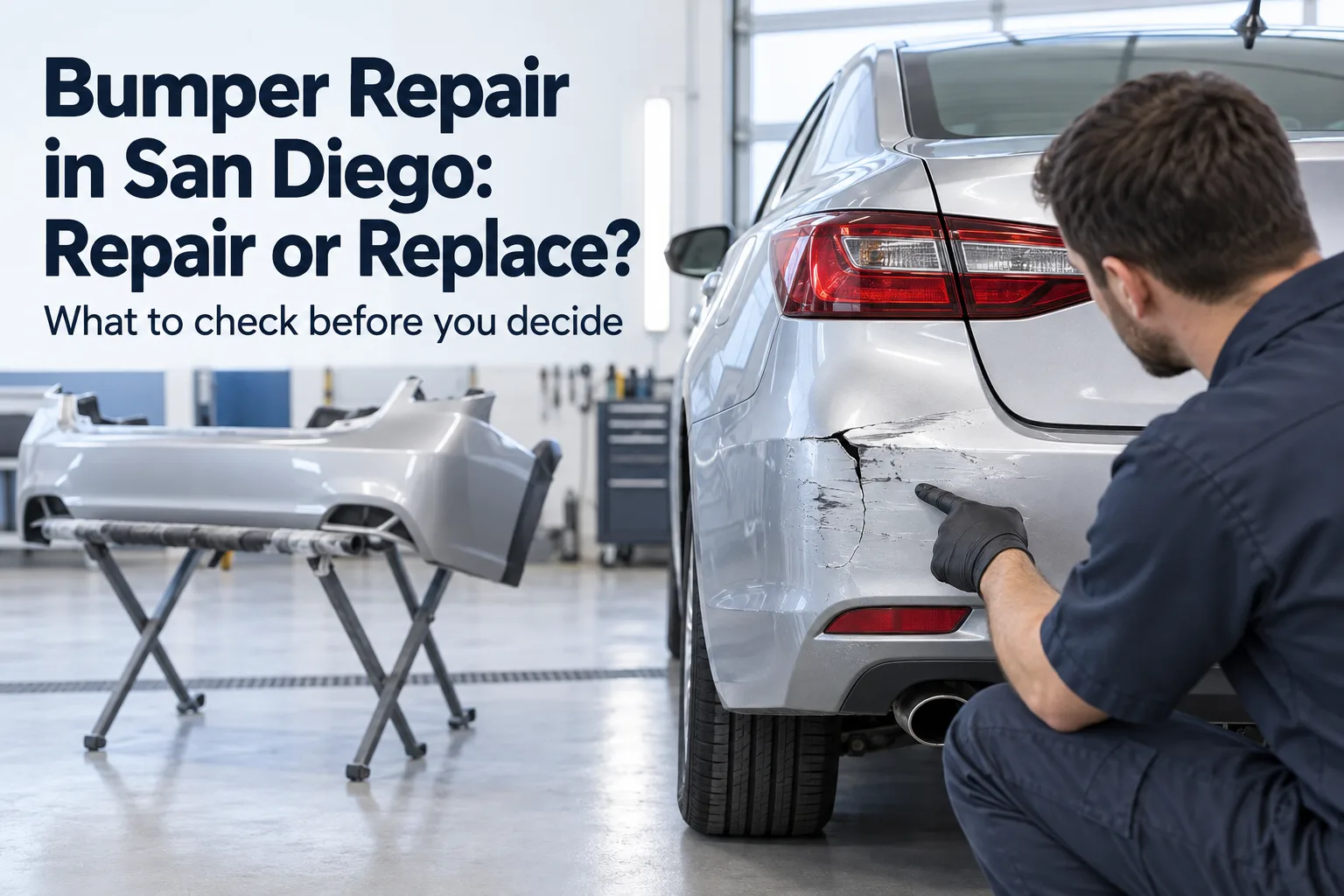
Repair the bumper cover when the plastic is still one solid piece and the damage is a scuff, a shallow gouge, a small crack or a broken tab. Replace it when the plastic is split through, torn, warped by heat, or missing the mounting points that hold it to the car. But the cover is only half the decision. What sits behind it often matters more than what you can see.
Repair the cover when the plastic is still one solid piece
Most modern bumper covers are molded plastic skins over a structural bar and an energy absorber. The skin is made to flex and, in many cases, to be repaired. These problems usually fall on the repair side:
- Scuffs and paint transfer. If the surface is scraped but the plastic is not deformed, this is a refinishing job, not a parts job.
- Shallow gouges. Material can be filled, shaped and sanded back to the original contour as long as the plastic around the gouge is sound.
- Small, clean cracks. A crack that has not spread and does not run through a mounting area can often be repaired from behind and refinished.
- Broken tabs. The tabs and brackets that clip the cover to the car break often in low-speed bumps. A single failed tab is a repair candidate. Several in a row are a different conversation.
Repair has a real advantage. You keep the original part and its original fit, since factory bumper covers are built to line up with the fenders and the body lines around them.
Replace it when cracks run through, tabs are gone, or the shape won't come back
Replacement makes sense when a repair would be a patch on top of a patch. Look for:
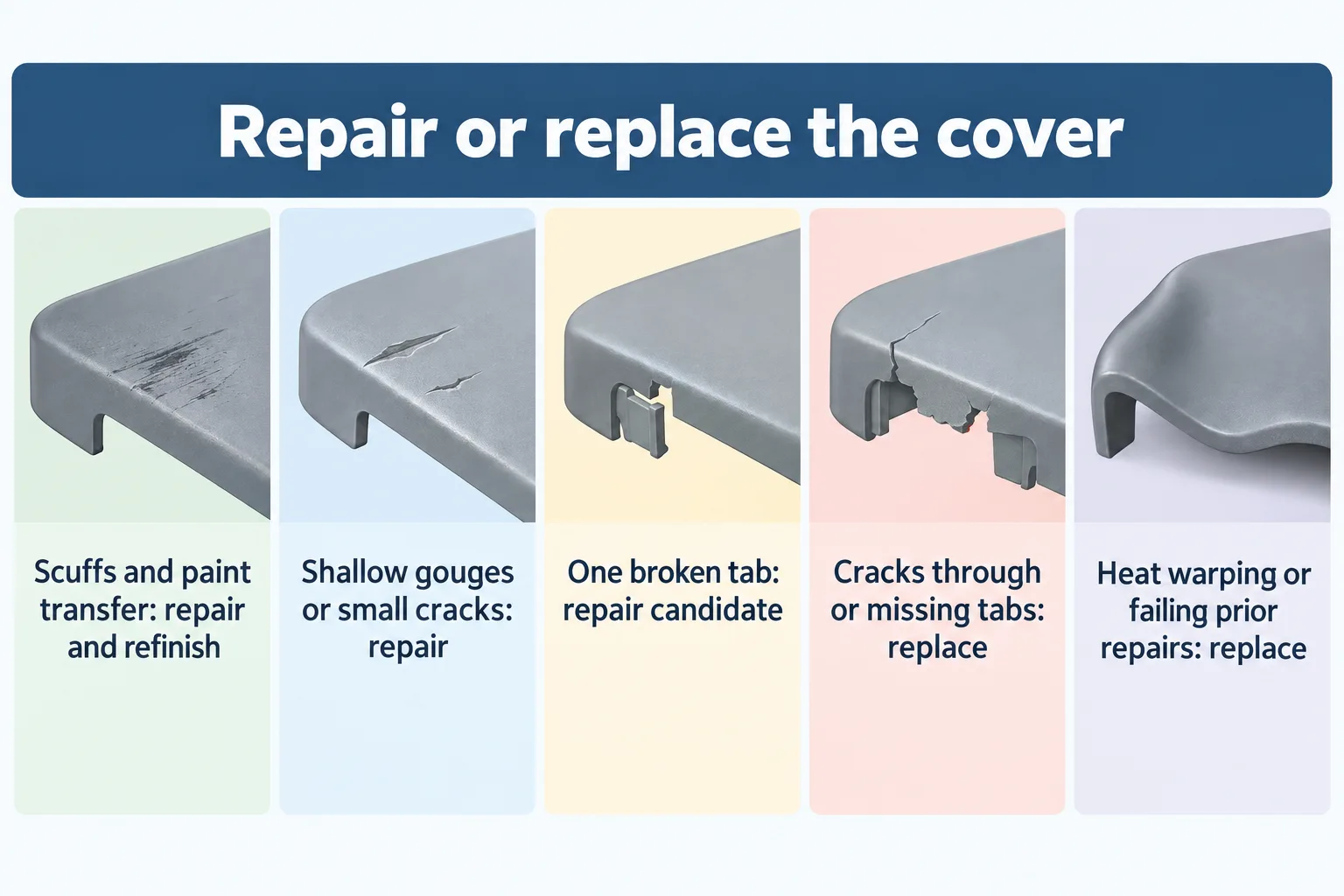
- A crack that runs most of the cover's length or crosses a mounting point.
- Torn or missing chunks of plastic.
- Multiple broken tabs, so the cover cannot hold its position on the car.
- Heat distortion or a stretched, wavy surface that will not settle back into shape.
- Prior repairs that are failing again.
Some people will push back on this next point. A replacement is not automatically the expensive, wasteful option. If a repair needs heavy rebuilding to get the plastic straight and strong, a new cover, painted to match, can give you a cleaner and more predictable result.
A good shop should tell you which situation you are in and why. A shop that always says repair, or always says replace, is not really looking at your car.
Judge the damage behind the bumper cover, not the scuff you can see
A bumper that looks like a cosmetic scrape can hide damage underneath. Before you accept any estimate, ask whether the cover was removed and the following were checked:
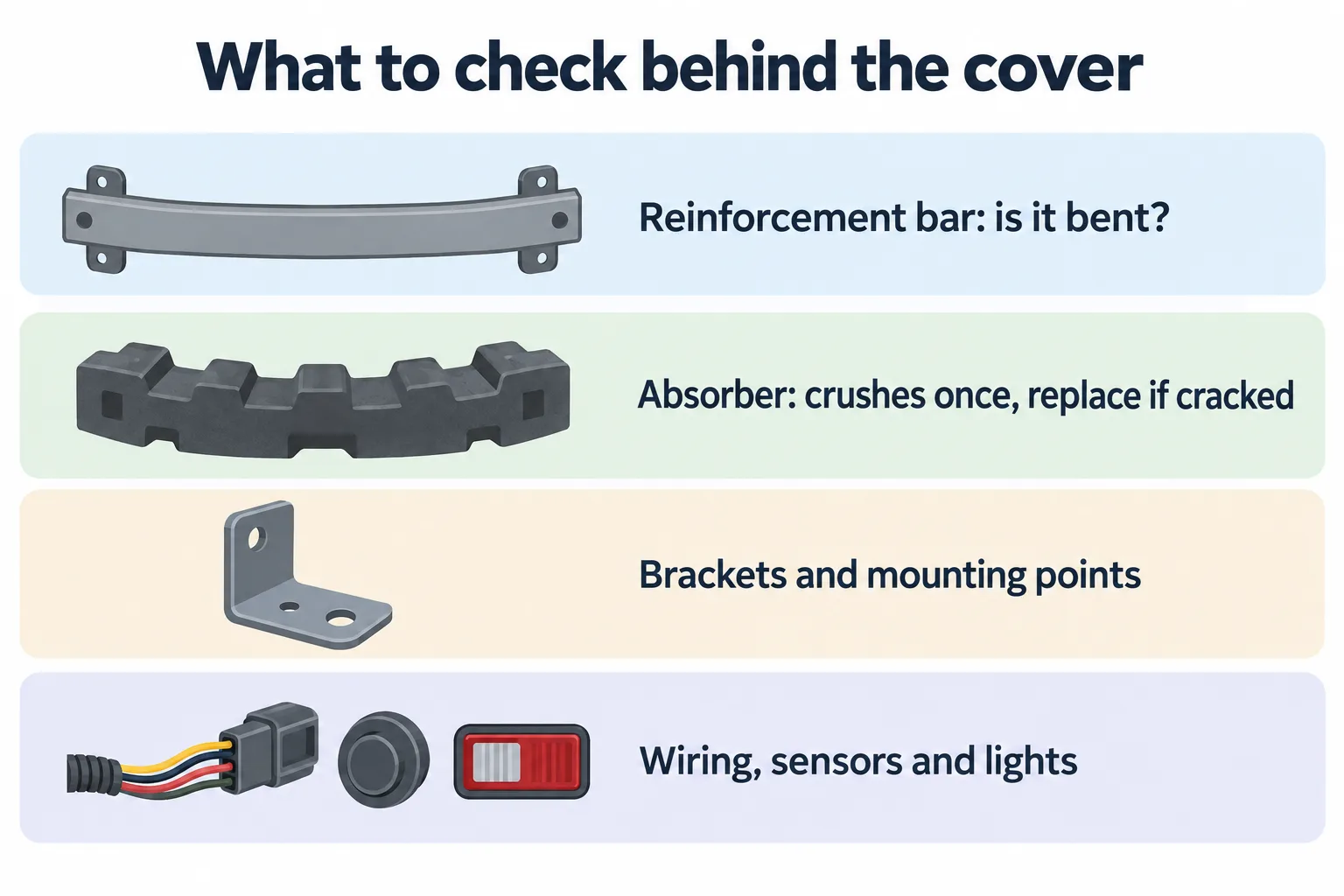
- The reinforcement bar. If it is bent, the car is not protected the way it was designed to be.
- The foam or plastic absorber. It is made to crush once. A cracked absorber should be replaced, not ignored.
- Brackets and mounting points. Bent brackets show up later as uneven gaps and a bumper that sits slightly off.
- Wiring, sensors and lights. Fog lights, harnesses and sensors sit close to the cover and are easy to damage.
That is why an estimate made from photos or a quick walk-around is only a starting point. The real scope often shows up once the cover comes off.
If the shop finds more damage, that is normal. It should explain what it found, show you photos, and get your approval (and your insurer's, if a claim is involved) before doing extra work. The collision repair process covers how inspection, approvals and parts ordering fit together.
Paint is where a bad bumper job gives itself away
You can usually spot a poor bumper repair from a few steps away: the bumper is a slightly different shade from the fenders beside it. Modern paint colors shift with the angle of the light, and a car that has faded in the San Diego sun will not match a mixed batch straight from a formula.
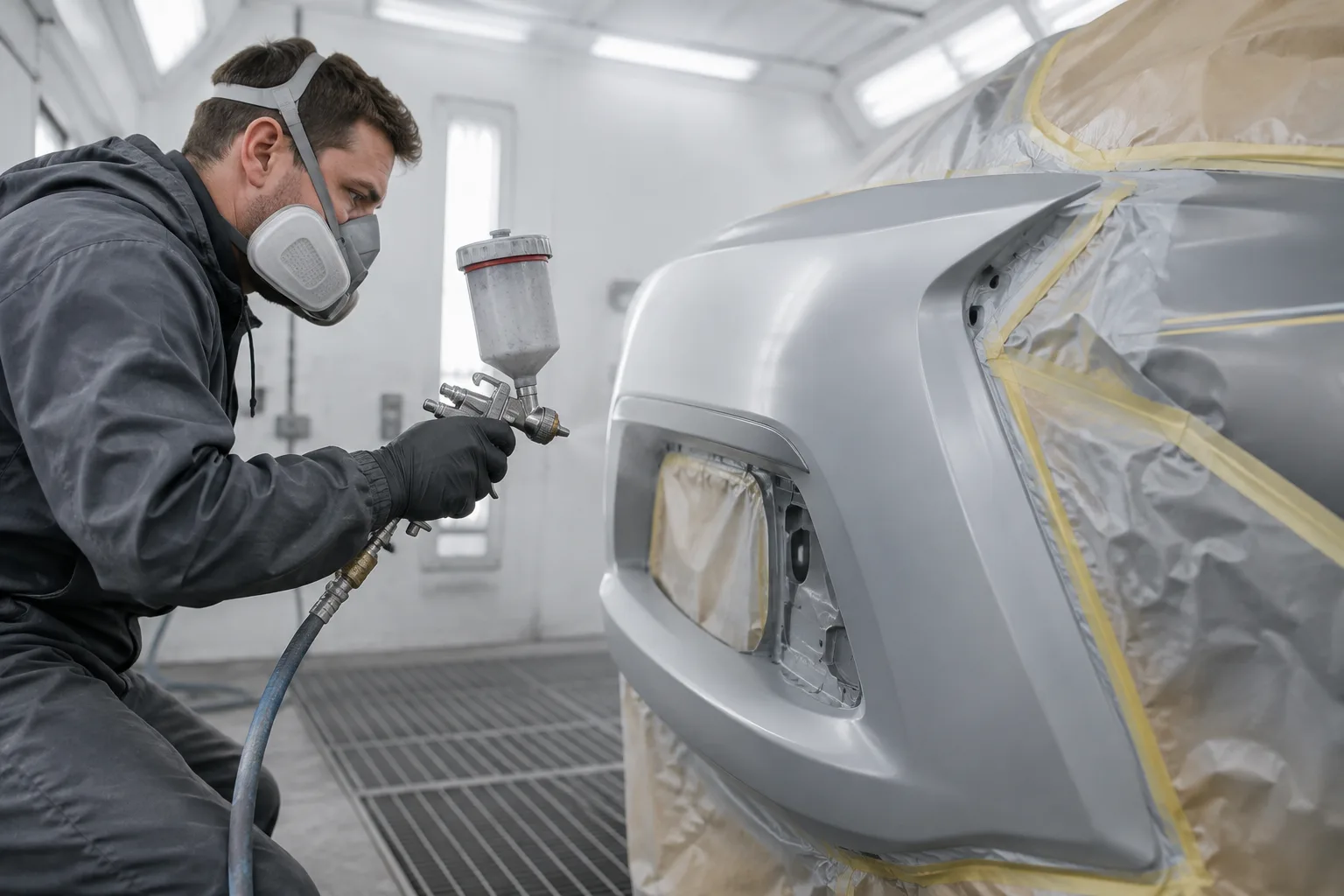
A proper refinish means matching the color to your actual car and blending the new paint into the neighboring panels so the transition disappears. Ask whether the estimate includes blending. If a shop paints only the bumper and stops at the edge, expect a visible line in some light.
Ask about a warranty on the paint work, too. Peeling, clouding and fading can take a while to show up, so a warranty only helps if it is written down.
Sensors and cameras turn a bumper job into a calibration question
Many bumpers carry parking sensors. Some carry radar units or sit near cameras that drive blind-spot monitoring, adaptive cruise or collision warning. Once the cover has been removed, repaired or replaced, the sensors have to go back in the right positions, and the system has to work as intended.
Ask these questions directly:
- Will the parking sensors be reinstalled and tested after the cover is painted?
- Does my car have radar or camera systems near the bumper that need recalibration?
- If so, is that included in the estimate, or will it show up later as a surprise?
This matters most on luxury and European vehicles, where the manufacturer's repair procedures spell out what has to be done and in what order. If you drive a BMW, Mercedes-Benz, Lexus, Porsche or Audi, a shop that follows those procedures is not a luxury add-on. It is how the safety systems keep working and how the car holds its value.
Ask five things before you pick a shop
Searching for a good body shop in San Diego gets you a lot of names and not much to tell them apart. These questions do that work:
- Will you remove the cover and inspect behind it before finalizing the estimate?
- Is this repair or replacement, and why? The answer should be specific to your bumper.
- Is blending into the adjacent panels included?
- What happens with my sensors and any camera or radar systems?
- How will I hear about progress? Photo updates by text beat wondering what is going on with your car.
One more point if insurance is involved: in California, you choose the repair shop. Your insurer may suggest one, but the decision is yours.
Whether to file a claim at all depends on your deductible and the estimate. If a bumper repair is close to your deductible, you may be paying either way, and that is worth knowing before you call your insurer. Our walkthrough on how insurance claims work after an accident explains the steps in plain English.
Where San Diego Auto Repair & Collision fits
San Diego Auto Repair & Collision is at 3877 42nd St in City Heights, serving drivers across North Park, University Heights, Normal Heights, Kensington, Talmadge, Hillcrest, South Park, Golden Hill and the College Area. Bumper work covers crack, tab and scuff repair, or replacement painted to match, with parking sensors reinstalled. Luxury makes are repaired following manufacturer procedures, including ADAS sensor and camera recalibration.
Paint work carries a lifetime paint warranty, and the shop works with all insurance companies. Estimates are free, and you can see finished work on the before and after page. To get one, send photos or details through the contact page or call (619) 282-2400. You can also browse the full list of collision, paint, dent and frame services.
Quick answers about bumper repair
Can a cracked bumper be repaired, or does it have to be replaced?
A small, clean crack in intact plastic can often be repaired and refinished. A crack that runs a long way, crosses a mounting point, or comes with torn plastic or several broken tabs usually points to replacement. The call depends on the condition of the plastic and what is behind it, so it needs an in-person look.
Will a repaired or replaced bumper match my car's paint?
It should, if the shop matches the color to your actual car, which may have faded, and blends the new paint into the neighboring panels. If the estimate paints only the bumper with no blending, a visible difference in some light is a real risk.
Do parking sensors have to be recalibrated after bumper work?
Parking sensors need to be reinstalled correctly and tested. Cars with radar or cameras near the bumper, such as blind-spot or adaptive cruise systems, may also need recalibration under the manufacturer's procedures. Ask for that to be spelled out in the estimate.
Do I have to use the body shop my insurance company recommends?
No. In California, you choose the repair shop. Your insurer can suggest one, but the call is yours, and the shop you pick can work with your insurance company on the claim.
More articles
- Pick a City Heights Auto Body Shop by Its Process, Not Its Address
- Choosing an Auto Body Shop in San Diego: Read the Estimate
- ADAS Calibration After Windshield or Bumper Replacement
- BMW Collision Repair in San Diego: Dealer or Body Shop?
- Paintless Dent Repair in San Diego: When It Works
- What to Do After a Car Accident in California